
BLOG
Speed is Good. Growth is Better. But What Happens When Everyone Has the Same AI?
What leaders discussed at our London Uncommon Intelligence Breakfast.
Thanks to our panelists: Rory O’Neill – CMO at Checkout.com, Aman Khanna – Co-founder at Whiteboxx AI, Gabriela Henault – Chief Marketing Officer at Third Bridge, Maxwell Scott – Global Head of Marketing Strategy at EQT Partners, and Amol Punekar – EMEA Lead at Lyzr.ai.
AI is making organizations faster, but as access becomes ubiquitous, leaders are asking: When will all that additional activity actually translate into impact?
This question took center stage at Prophet’s Uncommon Intelligence breakfast in London with a panel spanning payments, expert insights, private markets, and AI technology.


Many leaders spoke candidly about what is working with AI – and what isn’t. Here are four conversation points that stood out:
1. When Everyone has the Same Intelligence, Point of View Matters More
Our digital twins demo showed just how powerful AI can be: AI personas of real customers, built from real-world data, can help businesses anticipate future performance. It’s one example of how marketers can interrogate data, simulate audiences and generate insight faster than ever.
But what happens when everyone can do that? If brands have access to the same models, data and intelligence, where does differentiation come from?
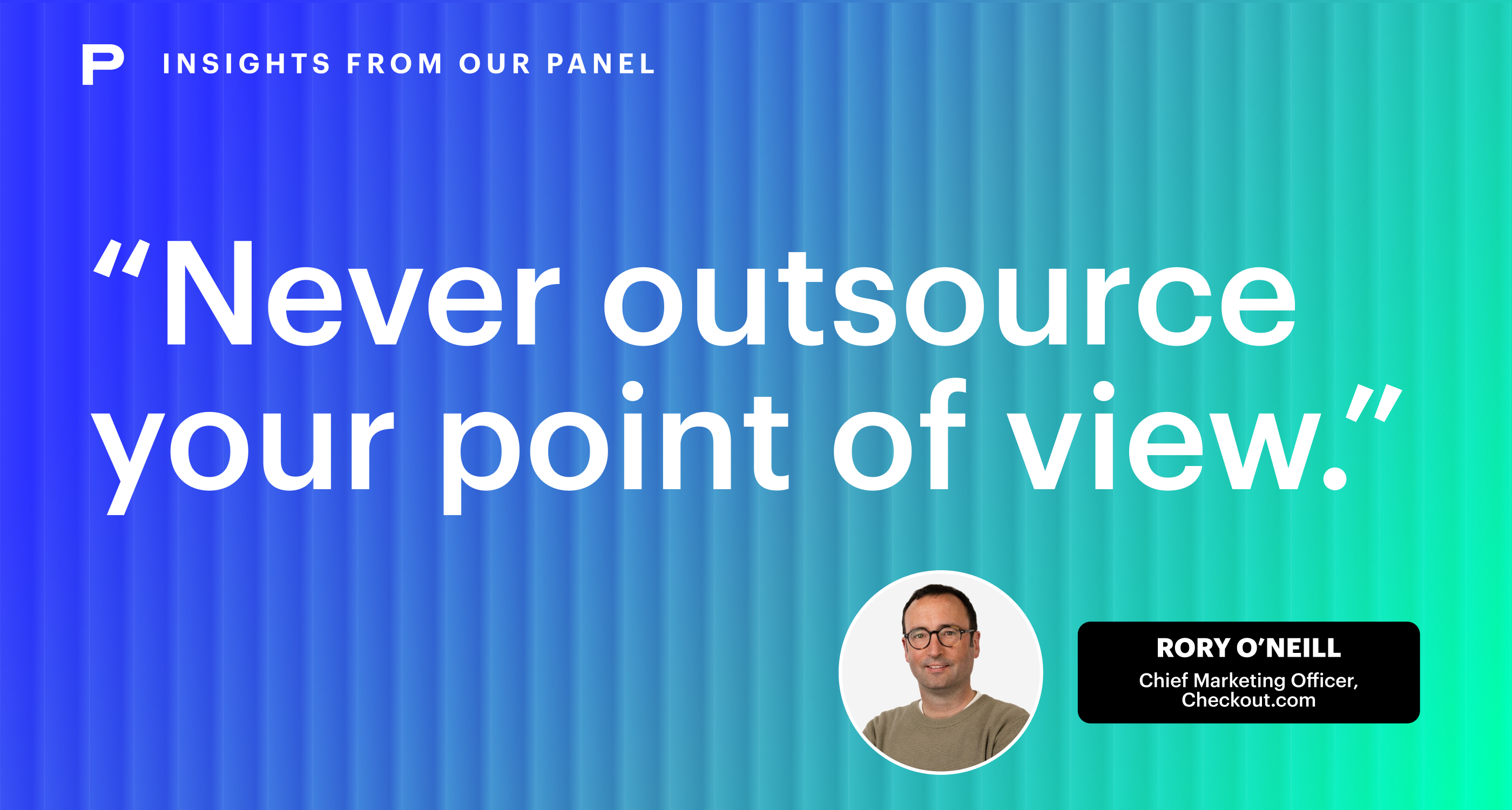
The payments industry offers a telling example. Rory pointed to the prevalence of language such as “frictionless” and “seamless.” AI can quickly tell marketers what the average customer says, wants, and expects. But the average rarely builds a distinctive brand. His advice was simple: “Never outsource your point of view. And that’s more true now than probably ever.”
Human insight remains critical. AI can surface signals at unprecedented speed, but instinct and judgment turn an unexpected customer phrase or cultural observation into something meaningful.
And as AI-generated content multiplies, Rory offered equally practical advice: “Fight slop with curiosity and respect for the reader.”
2. AI Doesn’t Fall in Love With Brands. People do. Brands Must win Both
As AI agents start making more choices on consumers’ behalf, brands will need to work harder to stay chosen. Why personally select a utility provider, payment method or commodity product if an agent can do it for you?
But not every choice is purely functional. “AI doesn’t fall in love with a brand. We, humans, do.” Aman reminded the room.
People form affinities and seek experiences. We might ask an agent to buy new shoes but still specify the brand. So it’s no longer enough for brands to be discoverable by AI. They need enough emotional resonance and preference that people still ask for them by name. Or, as Rory framed it more starkly: “If you’re a boring brand, you’ll be outsourced to an agent as quickly as possible.”
But brands need to serve these new decision-makers too. As Maxwell put it: “We now have two audiences: the individual and the agent. We need to make sure that we’re addressing both.”
That means designing for two very different decision-makers: the person and the AI agent acting on their behalf. An agent will compare options on price, availability and performance, so websites and content need to work for it. They also need to give the person a reason to ask for the brand by name. Brand doesn’t matter less in an agent era. It matters more.
3. Don’t Confuse Productivity With Impact
The productivity benefits of AI are becoming clear, but as the AI hype cycle continues, many leaders admit this new efficiency is not necessarily leading to better business outcomes.
“Our teams are able to get more done, and they’re able to feel more confident in their decisions, analyzing more information. But we’re not yet seeing it translate into a change in the metrics,” Gabriela observed.
Simply adding AI to existing processes will only take organizations so far. The bigger opportunity comes when the work itself changes. As Amol noted, “Productivity comes when you make AI invisible by embedding it into your workflows.”
Those pulling ahead won’t just be using more AI. They will be redesigning work around it, breaking down functional silos and finding opportunities to create something genuinely new, rather than merely producing average work faster.
4. Your AI Agents Are Becoming Your Brand
There is another side to the rise of agents: the agents working for organizations increasingly represent those organizations.
When an AI agent communicates or acts on a company’s behalf, the experience it creates becomes part of the brand. Trust, transparency and accountability aren’t just governance concerns anymore. They’re brand concerns. Every interaction can strengthen or hurt it, so train agents carefully.
Gabriela was quick to stress: “Our agents have to be perfectly aligned with our corporate brand. We must ensure they behave accordingly.”
Data will be fundamental to getting this right. As Aman argued, “AI in and of itself is a vehicle. The data it’s trained on makes it intelligent or dumb.
As Technology Gets Better, so Must our Judgment.
Today’s AI won’t be tomorrow’s. As Rory noted, “The LLM tools we use today are the worst we will ever use.”
But better technology won’t eliminate the need for human judgment. It could make it more valuable. When answers become vanilla, brands need to give us a reason to choose through trust, distinctiveness and compelling brand promise.
When it comes to growth, the winners won’t simply be those who move fastest. They’ll be the organizations that are clearest about where AI creates advantage and where being distinctly human still matters most. Finding that out requires action: experimenting, learning and sometimes getting it wrong.
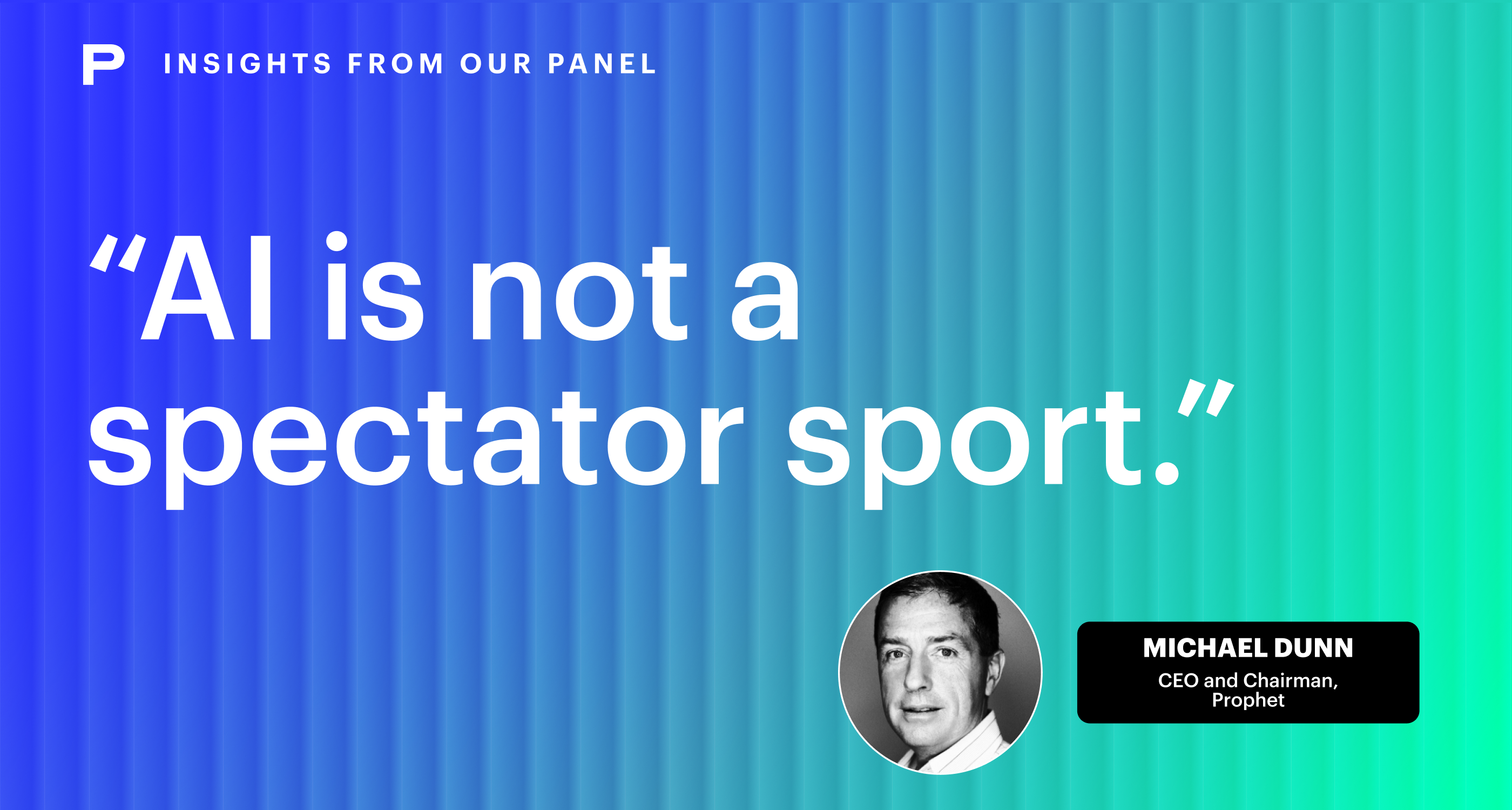
Or, as Prophet CEO Michael Dunn put it : ”AI is not a spectator sport.”


Don’t Miss a Beat
Sign up to receive our latest insights.
FINAL THOUGHTS
Speed is good. Growth is better. If you’re working out where AI can drive growth for your business, not just speed, we’d love to talk.
GET IN TOUCH
Thank you for your inquiry.