
BLOG
The Retail Store as a Platform: Designing for Commerce, Curation, Connection, and Culture
The most forward-thinking retailers are engineering immersive, multi-faceted platforms that curate commerce, foster human connection, and cultivate culture.
For decades, the narrative surrounding physical retail has been one of disruption and decline, a story pitting brick-and-mortar against the digital juggernaut of e-commerce. But this binary view is obsolete.
The future of retail isn’t about the store versus the website; it’s about the store acting like a website—or more precisely, like a platform.
The most forward-thinking retailers are no longer just designing places to transact; they are engineering immersive, multi-faceted platforms that curate commerce, foster human connection, and cultivate culture.
Why a Platform?
To understand this shift, we must first dissect what a platform business truly is. Unlike traditional linear businesses that create value in a straight line (make a product, sell it to a customer), platform businesses create value by facilitating interactions and transactions between distinct, interdependent groups. Think of Uber (connecting drivers and riders), Airbnb (connecting hosts and guests), or the Apple App Store (connecting developers and users).
Their core asset is not inventory, but the ecosystem and the data that flows through it.
They thrive on network effects: the more participants on one side, the more valuable the platform becomes to the other.
So, how does a physical retail store transform into this kind of dynamic platform?
It ceases to be a mere point-of-sale and becomes a curated, multi-faceted ecosystem where the retailer acts as the orchestrator, not just the owner.

Read this later? Download this guide as a PDF
Currently, only a handful of retailers operate stores with this mindset; some fashion brand houses and others like South Korea’s Gentle Monster, Nike’s House of Innovation, and Starbucks Reserve Roastery locations come close. So, how can other retailers turn physical stores into dynamic platforms?


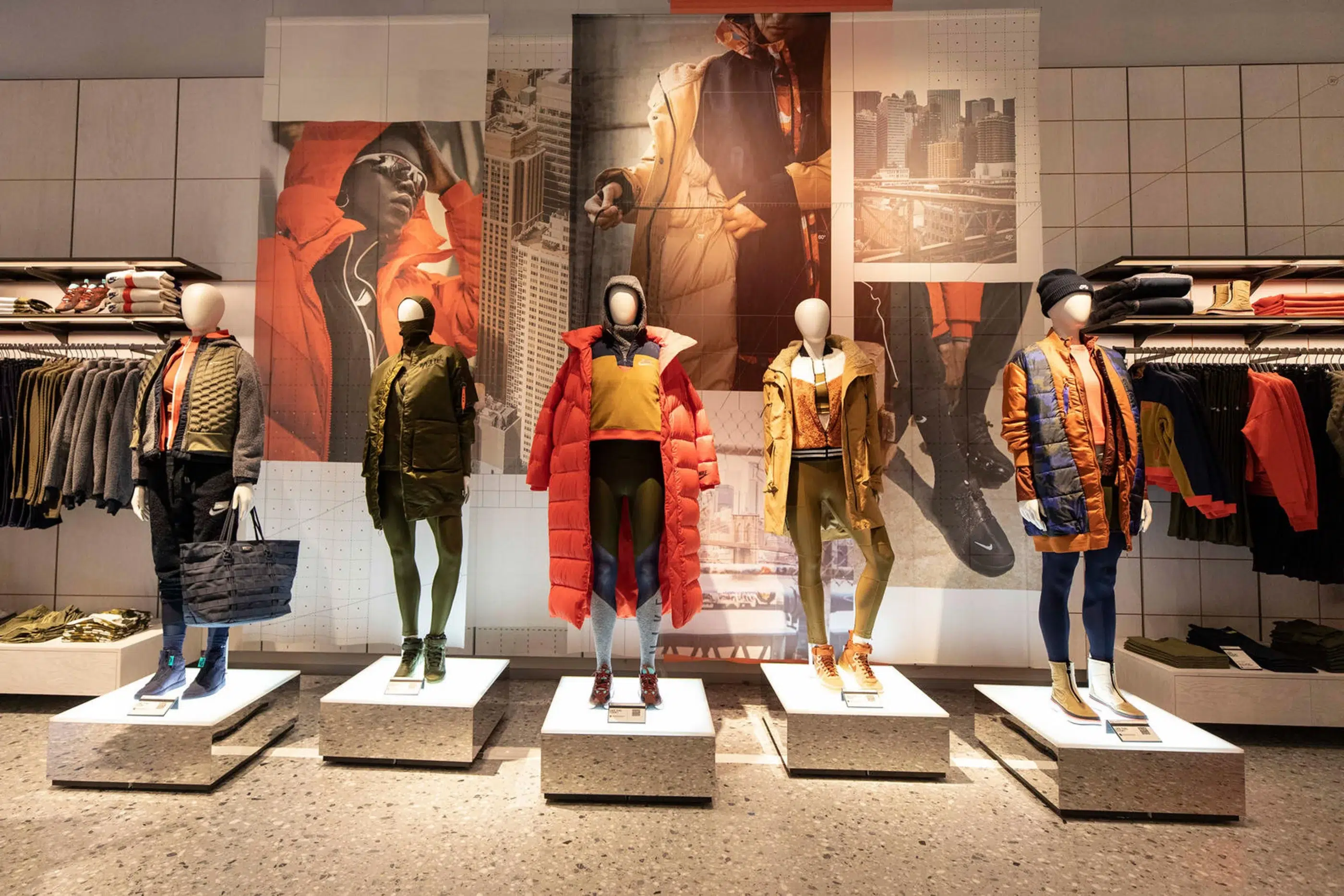

of a mannequin and shop the entire outfit, which can then
be purchased immediately through Instant Checkout. (Source: Nike)
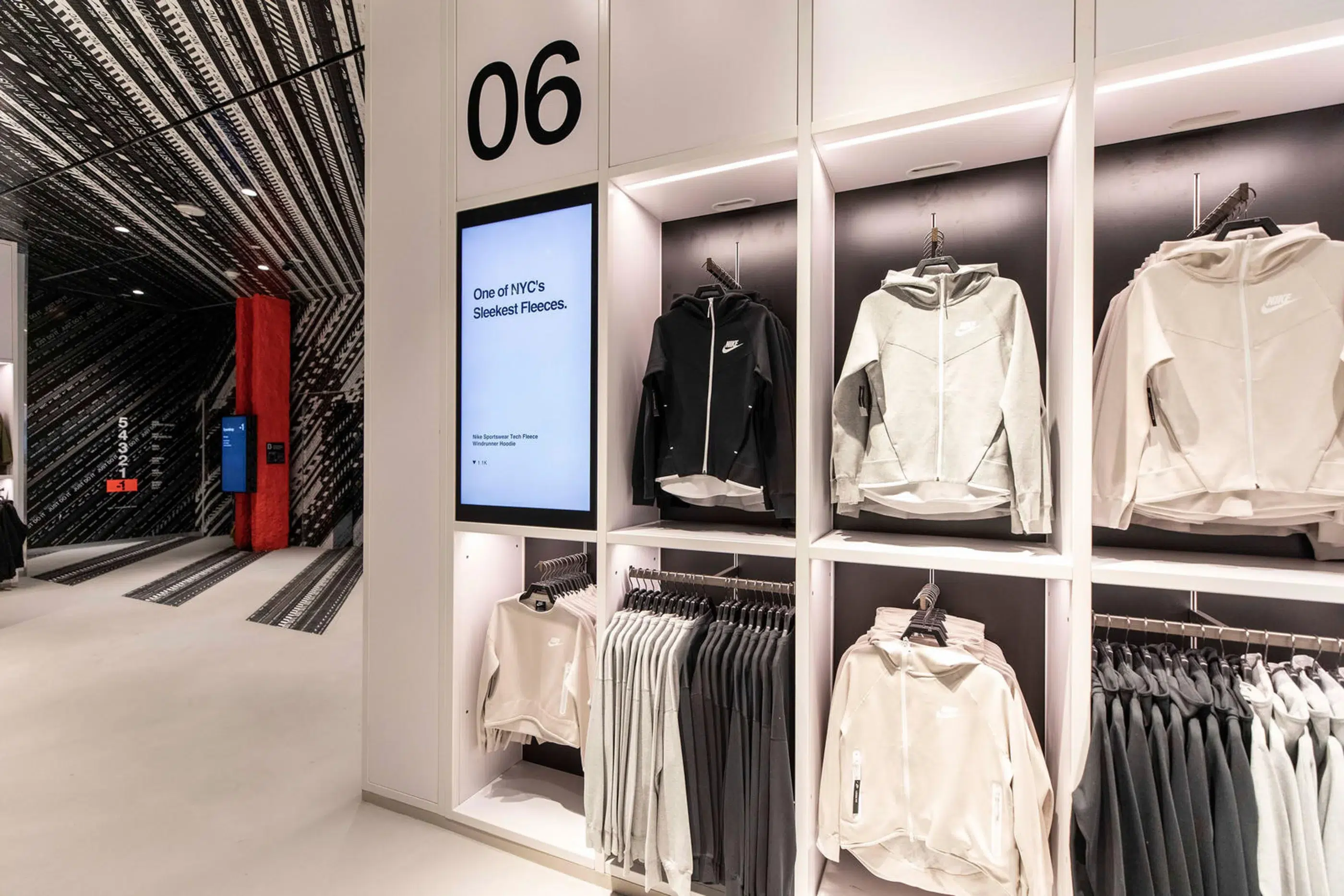
based on what the community wants. (Source: Nike)

The Store as a Platform for Curated Commerce
In a traditional model, commerce is straightforward: the retailer stocks what it predicts will sell. The platform store, however, reimagines the floor as a dynamic marketplace.
This means inviting third-party brands, both digital natives and local artisans, to “plug in” to the physical space. These brands become the “producers” on the platform.
For example, a Target or a Nordstrom isn’t just selling its own inventory; it’s hosting a rotating cast of pop-ups and exclusive collaborations. The physical store can become a living, breathing showroom for DTC (Direct-to-Consumer) or new-to-market brands seeking tangible customer touchpoints, and for established brands to test new concepts, as well as the in-store media promoting store-brands and those of the partners or suppliers.
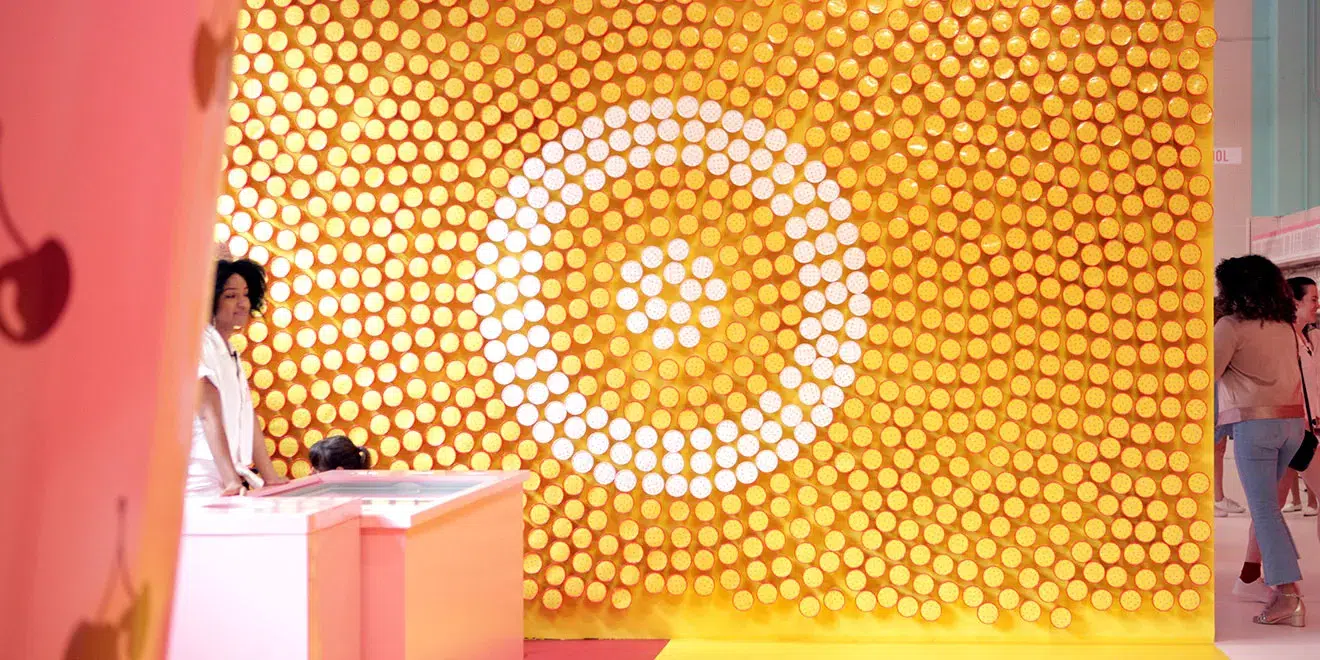
a pop-up shop in NYC (Source: Yuliya Kim for Adweek)
Over the years, Target has launched dozens of shop-in-shop partnerships with brands and designers to expand its relevance, driving traffic and revenue in important categories.
The retailer’s role shifts from dictator of assortment to curator of experience. They provide the stage—the prime real estate, the logistics, the foot traffic—and take a fee or revenue share from sales.
- This model can de-risk inventory, ensure a constantly refreshed and novel assortment, and turn the store into a destination for discovery, not just routine replenishment.
- The commerce becomes a value-added service within a larger experience.
- And this new curated commerce is supported by both digital tools allowing more seamless online-offline integration.
Collaborations Context:
The store becomes a vessel of collaboration with other culturally relevant brands or personalities, but in the context of the store’s brand experience. The immersive aspect blurs the line between the partner’s equities and the store’s brand, creating an exciting “equity flow” between the parties that can be felt by the customer, shaping brand memories that drive future visits.
Seasonal Sensations:
Shifts in visual merchandising are not just about decorating for the season but being relevant to the consumer mindset regarding everything else going on in their lives. The “platform” shifts its language, its visual effects, and particularly its in-store media content, messaging, creative, and promotions to align with consumer attention.
The Store as a Platform for Human Connection
This is where the physical platform truly outshines its digital counterparts. E-commerce can be transactional and solitary.
- The store-as-platform is designed for social and educational interaction, creating a powerful network effect between customers, staff, and brands.
- The “users” on this side of the platform are the customers seeking connection and knowledge.
- The “providers” are the store’s staff, brand ambassadors, and even fellow shoppers.
Staff as APIs:
In a platform store, associates are not just cashiers or stockers; they are “Application Programming Interfaces” (APIs)—human endpoints of data and expertise. Armed with AI-enabled tablets that access real-time inventory, customer purchase history, and product information, they can offer hyper-personalized service. They are stylists, tech gurus, and guides who facilitate a deeper relationship between the customer and the brand ecosystem.
The “platform” also leverages digital tools to supplement the store staff, such as “endless aisles” providing vastly expanded assortments with minimal inventory carry, and visualization tools (magic mirrors and mobile-enabled AR applications) to streamline trial supported by the personal guidance of staff.

The next generation of “clienteling” will be AI-enabled.
Community as Content:
The store itself becomes a venue for events—workshops, maker classes, fitness sessions, or panels. A REI store hosting outdoor survival classes or an Apple store holding Today at Apple creative sessions aren’t just selling products; they are selling proficiency, passion, and community.
These events create recurring reasons to visit, transforming the store from a shop into a clubhouse. The connections formed here—between customer and expert, and between customer and customer—create immense loyalty and a defensible moat that Amazon cannot easily replicate.

Building community programming around shared interest drives trips and loyalty.
The Store is the Clubhouse:
As loyalty programs evolve to be more about access to experiences and not just collecting points, the store environment can play a key role in evoking a sense of belonging.
Location-based programming as described above is only the start, as technology unlocks better forms of recognition (opt-in facial recognition and geo-location using signals from mobile devices–or even using simple card swipes or RFID readers), more personalized attention can be brought to loyalty program participants, rewarding frequent visits with in-the-moment promotions, access to preferred store hours, and even the provision of food and beverage amenities…
Not by Bread Alone:
As noted above, in creating a platform orientation to the store, the execution should at a minimum deliver a “more reasons to go and more things to do when you are there” experience. Food and beverage offerings provide that always-appreciated and often-desired complement to a shopping trip.
Aligning the offer and assortment with the brand’s personality (think Ralph’s, the Ralph Lauren café attached to many of its stores globally), and should be tuned to be feasibly operated.

The Store as a Platform for Cultural Cultivation
The highest function of the retail platform is to move beyond utility and into identity. It becomes a stage for cultivating and broadcasting a specific culture. Platforms like Instagram or TikTok don’t just host content; they shape trends, language, and aesthetics.
Similarly, a retail store can act as a cultural touchpoint. It’s a three-dimensional manifestation of a brand’s worldview.
A Glossier store isn’t just a place to buy makeup; it’s an Instagram-ready shrine to millennial-pink aesthetics and community-driven beauty. A Patagonia store isn’t just for outdoor gear; it’s a hub for environmental activism, complete with repair workshops and advocacy materials.
- In this model, the transaction is almost a byproduct of cultural participation.
- Consumers, especially younger generations, don’t just buy products; they buy into beliefs. The retail platform allows them to physically immerse themselves in those beliefs.
- The store curates not just products, but a vibe, a value system, and a tribe. This cultural capital is the most powerful form of branding, creating evangelists who wear their purchases as badges of affiliation.
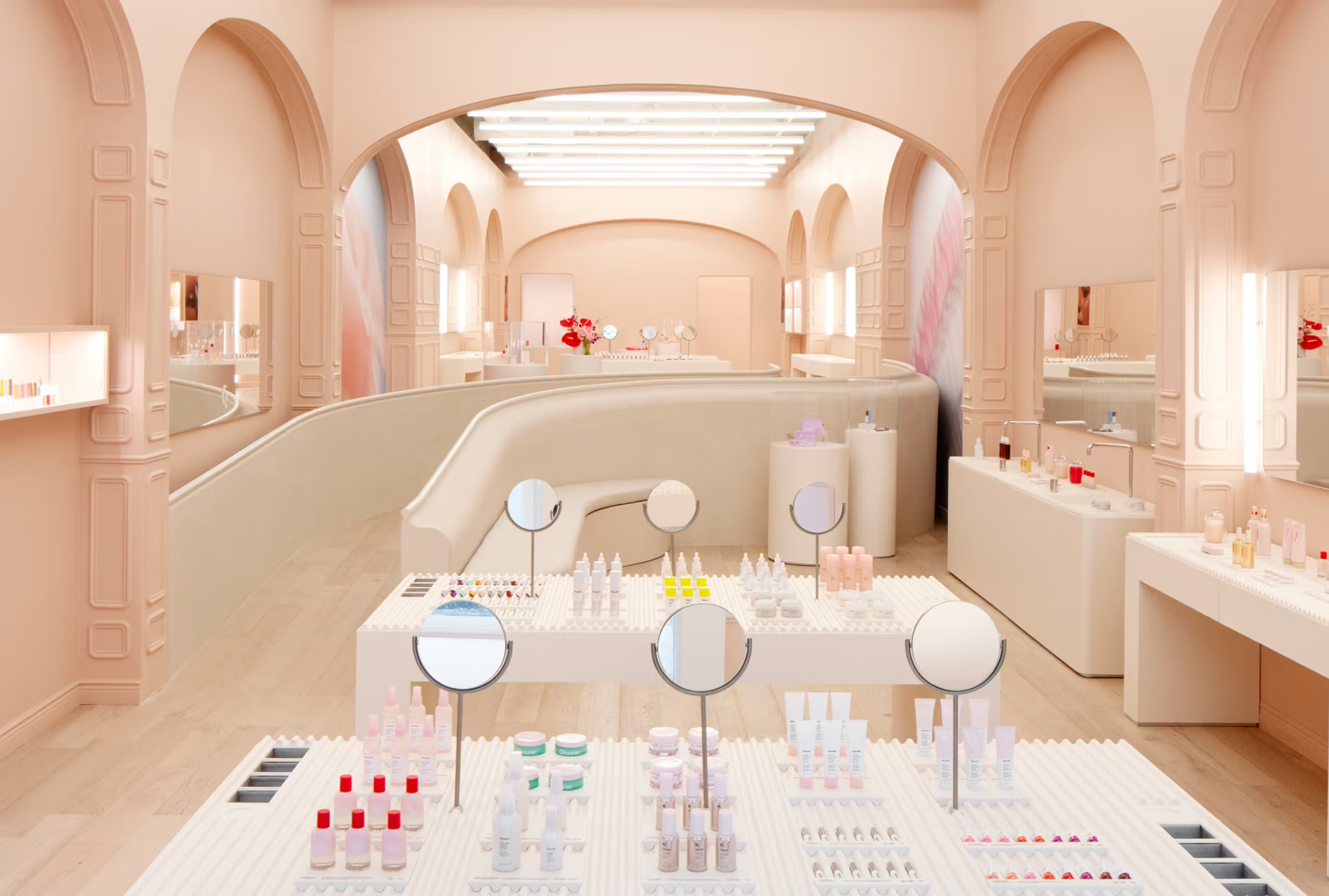


Being in the cultural conversation drives targeted relevance.
The Store as a Media Platform
In today’s retail environment, the store itself is being reimagined as a dynamic media channel, where digital screens transform passive aisles into immersive content experiences. Gone are the days of simple promotional loops; these networks now deliver curated, high-quality content ranging from brand storytelling and recipe tutorials to lifestyle documentaries and live social media feeds.
This content serves a dual purpose: it captivates customers, increasing dwell time and enhancing brand perception, while simultaneously functioning as a highly targeted, daypart-driven advertising platform.
Brands can purchase screen time much like a digital out-of-home network, delivering contextually relevant messages at the precise moment of purchase consideration, effectively turning the physical store into a broadcast studio for targeted, shopper-centric media.
This evolution into a media platform allows retailers to monetize their physical footprint and customer attention in new ways, generating high-margin revenue streams beyond product sales.
- The data captured—such as dwell times, engagement metrics, and correlation with sales data—creates a powerful feedback loop, enabling both retailers and brands to refine messaging in real-time for maximum impact.
- Ultimately, the store-as-media-platform model elevates the shopping journey from a mere transaction to an engaging, informative, and entertaining experience.
- It represents a profound convergence of physical and digital worlds, where the environment not only sells products but also tells stories, builds community, and operates as a sophisticated, measurable media entity in its own right.

POS media can drive disproportionate selection opportunities for brands and a meaningful revenue stream for the retailer.
Designing the Platform: Data as the Foundation
Underpinning all four of these dimensions—Commerce, Curation, Connection, and Culture—is data. A platform is useless without a feedback loop. In-store sensors, Wi-Fi analytics, mobile app interactions, and transaction data provide a rich, nuanced understanding of how people move, dwell, and interact within the physical space.
This data informs everything: which pop-up brands drive the most footfall, which workshops lead to the highest basket size, which product placements create the most social media buzz, and even how loyalty can be manifested in the store.
- This allows retailers to iterate and optimize the “user experience” of their physical platform with the same agility (but perhaps not the same speed) as a digital product team.
- This closed-loop system ensures the store remains relevant, responsive, resilient…and productive.

Hema Market leverages its fully integrated online-to-offline data ecosystem to deliver a seamless, hyper-personalized customer experience. It unifies digital and physical shopping, enabling real-time analysis of individual preferences, purchase history, and even dwell time.
This data powers dynamic in-store digital signage and an AI-driven replenishment system, ensuring popular SKUs are never out of stock. The result is a frictionless journey where customers receive relevant offers, enjoy accurate 30-minute delivery windows predicted from historical traffic and order data, and find stores curated to their neighborhood’s tastes—transforming raw data into intuitive, time-saving convenience.
The Transaction as an Outcome, Not the Goal
The store of the future is not a warehouse. It is a networked platform. Its success is measured not just in sales per square foot, but in engagement per visit, the strength of its partner ecosystem, and its cultural resonance.
By designing for commerce as a curated service, for connection as a core utility, and for culture as a key differentiator, retailers can build physical spaces that are not just surviving the digital age but thriving within it. The transaction is no longer the singular goal of the store visit; it is the natural outcome of a valuable and valued platform experience.

Don’t Miss a Beat
Sign up to receive our latest insights.
FINAL THOUGHTS
Retail’s next chapter will be written by stores that function as platforms — shaping commerce, curation, connection, and culture, with the transaction as the outcome rather than the aim.
Prophet helps retailers design these experiences to deepen relevance, loyalty, and drive uncommon growth.