BLOG

Why Healthcare Must View Customer Experience as a Product

Drugs and devices matter less. Today’s patients look at care as an experience.

Leading organizations are no longer viewing customer experience as an add-on, but instead as a core product, and the healthcare industry has been slow to adapt. In an earlier article, I introduced execution-based barriers in delivering a winning customer experience. The first of those barriers are not viewing experience for any customer – B2B, patient, consumer, etc. – as a core product. Most companies that are not digitally native are guilty of this. They have locked themselves into how they operate or what they manufacture.

“They have gone beyond customer-centric and are customer-experience-centric.

If you ask the CEOs of pharmaceutical companies, health insurers, or health systems what their core products are, they will tell you drugs, plans, and care delivery, respectively. This is reinforced by their categorical descriptors, and that’s what their customers, investors, and the larger healthcare community want from them; pharma = drugs, payers = plans, providers = care. Now step outside of healthcare and consider everyone’s favorite “best company” for example, Amazon. Are they in the retail, logistics, or media business? The answer: it doesn’t matter. They build products around experiences. They have gone beyond customer-centric and are customer-experience-centric.

This Isn’t Another Sloppy Amazon Reference.

No one wants to read another naïve article about what healthcare can learn from Amazon, Uber, or Netflix. I want to make sure I bring this down into a very specific insight that all healthcare organizations can act upon: manage customer experiences as core products. The reason everyone raves about the experiences with the winning, digitally native brands is that each micro-moment is a product. Micro-experiences such as sign-up, sign-on, payment, and search are managed as discrete products with product teams of these famed digital brands.

Healthcare Organizations Are Already Skilled in This.

Most healthcare organizations have developed well-structured businesses around what they view as their core product. Insurers have a head of Medicare Advantage plans.  Health systems have a head of neurosciences. Life sciences companies have a head of Diabetes Care. And they also have multiple product managers that report up to these leaders. While easier-said-than-done, these organizations need to deploy that same model to experiences, and declare experiences and supporting micro-experiences as products.

Equally important is how healthcare companies deploy product management teams. As new products become mature, scaled products, the product management teams behind them need to adjust.  For healthcare leaders that haven’t kept tabs on modern product development, it has changed dramatically in recent years, as my colleague Tony Fross summarized.

Blending New Products With Legacy Products Is the Trick

Value from legacy products isn’t going away. Hospitals always need to treat sick people, pharma companies always need to invest in the next life-changing drug, and the opportunity to create new payment products seems endless. However, there is a difference between creating value and winning. All things equal, companies that focus on delivering great customer experiences within their competitive sets will be winners in the future.

Let’s take a quick look at the following three examples of healthcare organizations that are treating the customer experience as a core product:

  1. Pill Pack: It’s not the world’s first pharmacy, nor the first one to leverage digital. What has accelerated its success is that the entire operation is centered around customer experience. Yes, the drugs themselves and logistics are critical, but they are wrapped-around an experience-first “product”.
  2. Oscar Health: It’s nearly impossible to separate legal and regulatory policy from an insurance company’s performance. That said, Oscar Health has gone from 15,000 members in 2014 to 257,000 members in 2019 – even though its plan pricing and network coverage are nearly the same as established players, and even has fewer insurance products to pick from. Oscar’s rapid growth and continued expansion is based primarily around being “a health insurance company centered around the patient.” They even jokingly claim, “We didn’t create Oscar because we liked health insurance.”
  3. Geisinger Medical Center: Not all best-in-class examples are start-ups. Geisinger’s money-back guarantee is a great example of putting the customer experience first. Over the past three years, the organization has refunded between $200,000 to $400,000. Roughly the cost of three billboards for a year. Yet, it rallies employees to ensure they are putting the patient experience first. Patients feel like they are treated as people,     not objectives, and are more empowered and less anxious, which is unfortunately often the opposite in most hospitals.  The “money-back guarantee” is one of many examples where Geisinger is treating customer experience as a core product, and why it’s one of the most admired health systems in the US.

FINAL THOUGHTS

When it comes to executing a customer experience strategy, healthcare organizations need to acquire new skills and expertise. Most health organizations have proven product management teams, sometimes called service lines or brand teams, but still maintain a highly focused approach to innovating and managing products. The critical shift is recognizing that customer experience is a product and should receive the same treatment, structure, and incentives as a legacy core product. Just as it’s being done in the companies transforming the world of healthcare as we know it today.
BLOG

Learning from the Leaders Behind the Johns Hopkins Capacity Command Center

Its work with GE Healthcare helped mix, filter and create real-time information from dozens of data streams.

When one thinks of innovation and healthcare business transformation, it’s often in association with young, West Coast start-ups founded in the 21st century.  Rarely is an organization that was founded prior to 2000 regarded as modern and innovative.  Not to mention one that was founded in the 1800s. That’s what makes the Johns Hopkins Capacity Command Center, designed and built with GE Healthcare Partners Group, so interesting. It’s a collaboration of two organizations, both over 125 years old, working together to create one of the most impactful healthcare innovations in recent years.  

In this article, we go beyond how the GE Command Center at Johns Hopkins works and get into how it all started. Let’s dive into how the leaders behind the GE Clinical Command Center at Johns Hopkins Medicine have driven business transformation in healthcare.  

Where It All Began 

Soon after the Johns Hopkins Capacity Command Center went live, the Economist cited that “the biggest upgrades to hospitals are needed behind the scenes”—and went on to describe it as “a NASA-inspired ‘command center’ to manage its patient flows. Surrounded by 22 beeping flat screens, live video streams and lots of phones, staff members wearing headsets orchestrate the 1,100-bed institution around the clock. 

 GE Healthcare, a medical-technology firm, helped mix, filter and create new real-time information from dozens of data streams— in addition to designing the operating mechanisms, processes and even the physical space of the new center.  Bed-planning has gone from an art to a science with the help of programs that predict demand with great precision and warn when a crunch is approaching. 

Given the maturity of GE Healthcare and Johns Hopkins Medicine, and their ability to continually innovate, they classify as a “Transformer archetype” within the Evolved Healthcare Enterprise model.   

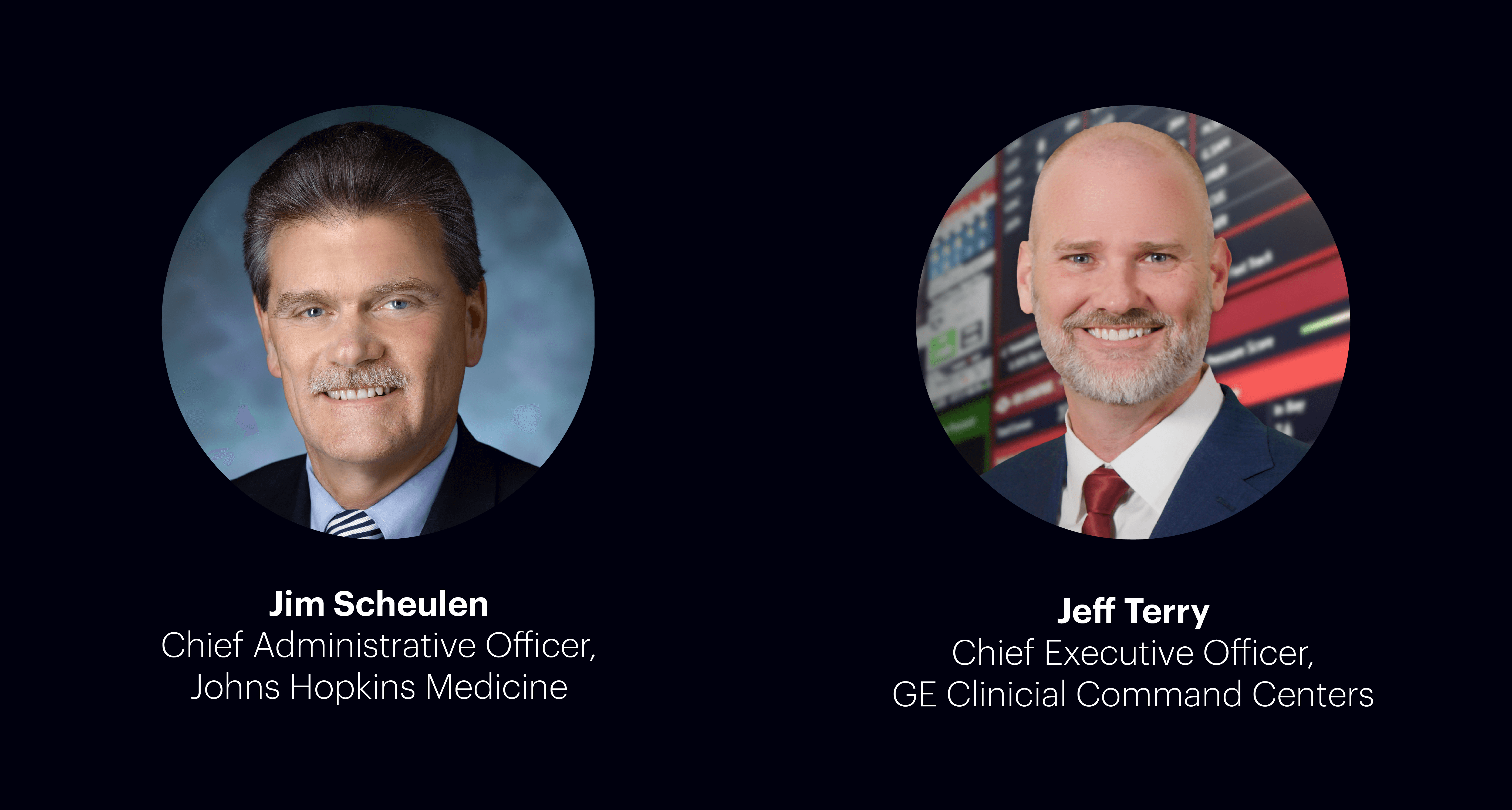
Recently, I spoke with Jim Scheulen, Chief Administrative Officer, Emergency Medicine and Capacity Management, Johns Hopkins Medicine, and Jeff Terry, CEO GE Clinical Command Centers. Here are a few themes behind their partnership that made the Command Center possible. 

It’s About the People Before It’s About the Technology 

Jim and Jeff both agreed this initiative would not have gotten out of the gates if it wasn’t for the leadership from both sides. Jim highlights, “Johns Hopkins clinical and administrative leadership is very strong and forward-thinking, who see immense value in using sophisticated tools and analytics to run operations. It was never a question of ‘if,” but ‘when’.” Jeff added, “We were struck by the humility of Hopkins’ leaders, at every level.  That translated to efficient interactions, which is key to moving forward at pace.And on the GE side of the house, the GE Healthcare leadership team provided broad success criteria and a budget. From there we had a safe space to innovate within.” 

This is quite important to highlight, as many mature enterprises tend to be risk-averse and are slow to adopt the technology. It has little to do with the age of the organization, but the degree to which leadership takes a progressive view on running a modern enterprise. Second, we often see older enterprises holding onto an “operator approach,” micromanaging everyone’s activity instead of setting parameters and letting teams operate with autonomy, speed and agility. This is what makes a Transformer different than older enterprises that are “just hoping” to be more innovative but don’t follow through from a leadership or supporting operating model perspective.   

Breakthrough Innovation Begins in Increments 

According to Jim, “As a lot of these things start, the lightbulb didn’t just go off and we decided to build the command center. Roots started when we at Hopkins started to think that we should use simulation modeling, good data and statistical analytics for how we do our business. Running it in small bits at first.”  Jeff adds, “From the GE side, we had been working on patient flow, access and throughput for about ten years with steadily increasing analytic capabilities. GE had explored something like this for the city of Rio de Janeiro and when we shared that with Jim and the Hopkins’ team it seemed like a very natural evolution of what they were already doing in small bits.” This is a huge advantage to Transformers. They often have a variety of low(er) tech solutions in place, acting as proofs-of-concept and allowing for these large, healthcare business transformations to be evolutionary from a risk perspective. 

Patience and Speed Aren’t Opposing Forces 

Many large, mature healthcare enterprises get into an “operations and optimization” mindset, and whenever an innovation opportunity comes along, there can be a knee-jerk reaction to ask, “What’s the cost? What’s the ROI? How long will it take?”  Breakthrough innovation takes time and comes with a fair degree of uncertainty. Coincidentally, health companies are well versed in this, as most clinical products and services don’t come with quick ROIs. As Jim explains, “Johns Hopkins is comprised of financially smart people, not unfamiliar with long returns. We are a research organization and used to seeing returns take time; we had targets set and have hit our targets as planned since opening the command center.” GE Healthcare was equally prudent in making adjustments as they went, “We didn’t just jump in and constantly make changes,” Jeff added. “We focused on solving one problem at a time for caregivers, confident that this would eventually coalesce into an integrated software platform. And that’s exactly what has happened.”  

Above all, Jeff underscored the importance of a common purpose. 

“There is no doubt that at big companies there will be many agendas in play. The key to this effort was to stay focused on authentically helping caregivers, and almost ignore the rest.”


FINAL THOUGHTS

Keeping the purpose at the core of a healthcare business transformation is important, as challenges and new insights will emerge along the way. As Jim points out to others that take on serious innovation opportunities, “It will be more than you think it is, and its an adventure, requiring a lot of adaptation along the way. Something of this scale was first-in-kind work. It was hard. And the talented, hard-working people behind it all are able to make it fun, and something we’ll never forget.”   

Jim and Jeff wanted to acknowledge some of their great colleagues who made this happen:

Ron Peterson, Judy Reitz, Mary Margarette Jacobs, Steve Mandell, Catherine Boyne, Alan Coltri, Jim Hainley, Damon Fisher, Bree Bush, Andy Day, Kathy Martin, Jim Livas, Manny Singh, Anne Cole, Ryan Treml, Ryan Mancl, Christine Peeters, Sreelatha Surendranathan, Pradeep Rai and Steve Verdi.

Ready to drive your business transformation forward? Learn more about Prophet’s services and feel free to get in touch today. 

PODCAST

Becker’s Healthcare Podcast: Interview with Scott Davis and Jeff Gourdji

23 min

Scott Becker interviews Prophet’s Scott Davis and Jeff Gourdji, co-authors of the book “Making the Healthcare Shift, The Transformation to Consumer-Centricity” on the Becker’s Healthcare podcast series for insights on what’s driving digital transformation in healthcare today.

Listen here for insights on how healthcare organizations can drive growth through consumer-led transformation.


BLOG

Building Relevant Brands in Healthcare

Make sure your healthcare brand is seen as modern, in touch and better than competitors.

It’s easy to assume that healthcare’s biggest challenges come from pressure to lower costs or growing consumer frustration. But Prophet has just published its fifth Brand Relevance Index, revealing a larger threat: Most people view the non-healthcare companies invading the industry as more relevant to their lives than traditional healthcare providers.

Our researchers ask thousands of consumers about hundreds of brands they’d consider using. Only one healthcare provider–Mayo Clinic (No. 24)–cracked the top 50 of our index. And the brands consumers say are most relevant? These include tech companies that are rapidly rolling out healthcare-related offers, like Apple (No. 1), Amazon (No. 7) and Google (No. 13).

While there’s no denying these brands dominate in other areas, many established healthcare organizations aren’t as worried as they should be. They see these outsiders as indirect threats, perhaps because they are less likely to provide direct care. But as these invaders create greater relevance in healthcare, their disruptive potential is growing. They can commoditize the delivery of care and marginalize providers.

Others see the tech threat as imminent. They believe that as people–doctors and patients alike–feel increasingly at home with tech, traditional healthcare models will get left in the dust. And because these invaders are powered by so much data, they can offer health innovations that are potentially faster, easier, cheaper and safer.

Here are few examples of tech companies disrupting the healthcare space:

  1. Amazon – It’s now adding skills to Alexa that are HIPAA-compliant, making it simpler for providers to use voice-recognition. Pillpack, its online pharmacy, is threatening giants in that field. It’s partnering with Berkshire Hathaway and JP Morgan Chase to form Haven, a still-vague initiative devoted to lowering cost and improving care. And it just launched a virtual clinic for employees, which many believe is a model for future offers.
  2. Apple – The tech giant has also announced plans for its own clinic, is winning with Apple Health Records, breaking down EMR silos and making data more portable.
  3. Alphabet – It is clear the company has a massive healthcare agenda, with efforts that include Google Health, Google Fit, Verily and Nest’s health-monitoring services. Last year, it hired David Feinberg, MD, who had been the CEO of Geisinger Health, to oversee these fragmented efforts. It’s also poached Toby Cosgrove, MD, a former CEO of the Cleveland Clinic, as an executive adviser to its Google Cloud healthcare and life sciences team.

Why isn’t healthcare more relevant?

Consumers are crazy about these tech brands, which have built relationships with people that are deep, immediate and intense. With average relevance scores in the 95 percent-plus range, they do well on all four core drivers–they are customer-obsessed, ruthlessly pragmatic, pervasively innovative and distinctively inspired. When asked about these brands, people often tell us, “I can’t imagine my life without it.”

Yet the scores for healthcare organizations are in the 70 percent range, on average, with some as low as 43 percent.

Frankly, we find this a little baffling. After all, healthcare is about life and death, feeling good instead of lousy. Shouldn’t we see healthcare organizations as more relevant to our lives than a two-hour grocery delivery or the new season of Stranger Things?

So we dug into the data, trying to discover why consumers are relatively indifferent to traditional healthcare organizations, even those that are undergoing impressive transformations.

“Shouldn’t we see healthcare organizations as more relevant to our lives than a two-hour grocery delivery or the new season of Stranger Things?”

After dissecting the relevance scores of 23 healthcare providers, we found inherent strengths. Almost all achieve very high scores on our measures of purpose, beliefs and values. And there are common weaknesses, especially in terms of access. Consumers give healthcare providers much lower scores for “Is available when and where I need it” than for other industries.

Along with Mayo Clinic, organizations like Northwestern Memorial Hospital, MD Anderson Cancer Center and the Cleveland Clinic rose to the top. When we compare the scores of the top three performers in the category with the bottom three, studying how they fare in each of our 20-plus attributes, we find three essential insights. They offer clues for organizations that are genuinely committed to driving a relevant brand.

The most relevant healthcare brands…

Consistently deliver on their promises

Healthcare is about flu shots and colonoscopies, not trips to Disney, so we’d expect these brands to score lower on measures like “Makes me happy.” But consumers want healthcare organizations to be practical, not joyful. They say the most relevant brands provide remarkably consistent experiences, and that they live up to their promises. They expect healthcare organizations to meet their most pragmatic needs. They are impressed when providers do so and well aware when they stumble.

Make sure they’re seen as modern, in touch and better than competitors

While it might seem obvious that communicating state-of-the-art offers is essential in healthcare, our survey shows it matters more than most organizations think. The top-performing brands typically score as much as 40 percentage points higher on questions like, “Has better products, services and experiences than its competitors” and “is always finding new ways to meet my needs.”

Aggressively cultivate trust

Trust is complex. It’s not something an organization does, but rather something it earns. Yet, being seen as trustworthy is an essential ingredient of success. Between 70 and 90 percent of consumers say they trust our top healthcare organizations. For the bottom three, those percentages barely make it past 40 percent. The best healthcare brands carefully track trust measures, including how people feel about data and privacy.

When consumers trust a provider, they’ll be more open to innovation. That engenders relevance, creating a positive cycle. In the case of Piedmont Healthcare, for example, more than 80 percent of consumers say that they would be willing to try anything new it offers them. For the lowest-scoring brands, that willingness hovers at around 30 percent.


FINAL THOUGHTS

Facing disruption from invaders like Amazon, Apple, and others, the healthcare industry is on notice. Finding ways to deliver better experiences and to remain relevant with consumers should be top of mind for all healthcare executives. At Prophet, we characterize the organizations that are committed to consumer-centric transformation Evolved Healthcare Enterprises. Read more about the four attributes of healthcare organizations dedicated to driving uncommon growth in the digital age.

BLOG

The Mind, Body and Soul of Healthcare’s Consumer-Centric Transformation

Change requires that leaders clarify purpose, articulate cultural expectations and alter incentives.

In today’s environment, patients are increasingly becoming “e-consumers” and that is a good thing. Despite its name, e-consumer is not a technical term. The concept of the “e-patient,” was coined in the 1990s by the late Tom Ferguson, M.D., an American physician who advocated for increasing the role of the patient in managing their own healthcare. E-patients, he says, are empowered, engaged, equipped and enabled. While the concept of the e-patient is limited to direct interactions with healthcare organizations, we have expanded and evolved it into the e-consumer. Read more here.

If healthcare organizations are to serve the e-consumer and engage, empower, equip and enable them, they too will need to make a shift by putting the consumer at the center of all they do.

Challenges of Consumer-Centric Healthcare

  1. Expanding from patient-first to consumer-first thinking.
  2. Being consumer-first even when it conflicts with being physician-first.

Neither is an easy task, and both demand a change in both organization and culture for most healthcare organizations.

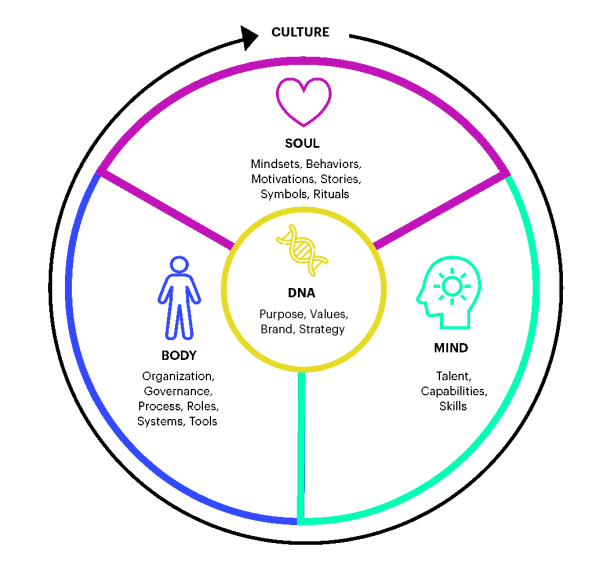
Our colleague Tony Fross writes about the “mind, body and soul” of digital transformation, but this model is also relevant for the consumer-centric healthcare transformation (digital or otherwise). In this Prophet model, an organization first determines what it wants its DNA to be – its purpose, its brand proposition and/or its strategic plan to win. Next, it goes to work on the “mind” (its talent, capabilities, and skills), the “body” (governance, process and tools) and the “soul” (its values, behaviors and rituals).

In interviews with over 70 healthcare executives for the book “Making the Healthcare Shift: The Transformation to Consumer-Centricity,” we found changing the organizations’ mind, body and soul to be burning issues, particularly among the CEOs that we spoke with.

Based on our findings, to be a consumer-centric healthcare organization, you must take the following steps:

1. Inspire the Team

Healthcare organizations may have a vision of where they want to go, but they need internal support to get there. “We didn’t develop a consumer- and patient-centric strategy for the sake of hanging it up on the wall,” says Kevin Brown, President and CEO of Piedmont Healthcare. “The patient is at the center of all that we do. We’re living and breathing it. It is how we manage, run meetings, prioritize initiatives, approve capital, hire talent.” Consumer-centric healthcare transformation must be activated at the ground level, and healthcare organizations can successfully inspire their employees in several ways; for example, demonstrate leadership role modeling, codify cultural expectations, co-create cultural expectations and make it personal.

Leadership Teams Need to Model Consumer-Centric Behaviors

Inspiring employees to embrace consumer-centricity requires vocal leaders, who demonstrate their commitment through actions. It is important to have leaders who are on board with pursuing consumer-centricity, as their behaviors set a precedent for the broader organization.

Articulate Cultural Expectations

Much like an organization’s definition of consumer-centricity, a consumer-obsessed culture is most impactful when outlined in a tangible manner and built into the organization’s processes. By articulating the culture through behavioral expectations, organizations can help employees understand what consumer-centricity means to them and what it looks like when carried out on a day-to-day basis.

“The patient is at the center of all that we do. We’re living and breathing it. It is how we manage, run meetings, prioritize initiatives, approve capital, hire talent.”

Tap Employees for New Definitions

In addition to articulating what consumer-centricity means, employees must derive personal meaning from it. That is particularly important, as employees are often the ones who interact with consumers and care for patients. Leadership can help employees find personal meaning through co-creation. After a merger, Indiana University Health (IUH) needed to integrate acquired and legacy cultures. The organization took the time to understand the needs, wants, and aspirations, both personally and professionally, of their employees to co-create a promise that was common to both its employees and members of the communities in which they lived. “Not everyone got the old promise, particularly our professional staff. With [the new one], everyone gets it. Can we show that we’re reinforcing this promise with actions and decisions? We have to do it for every patient, every interaction. That’s the next big step we’re working through,” says CEO Dennis Murphy.

Make Consumer-Centric Healthcare Personal

There is no question that healthcare is personal. Whether undergoing treatment or taking care of a sick loved one, we all experience healthcare at a deeply individual level. Sometimes, organizations can make consumer-centricity more powerful when leaders emphasize the personal aspect. That requires leaders to find their own source of inspiration so they can constantly remind the organization who they are serving each day, why their work matters and why the experience should be among the best in any category.

2. Enable Successful Employers

The executives we interviewed described many ways to enable their employees, including creating new working environments, reimagining traditional business functions and putting purpose over process.

Create Environments That Reinforce the Culture You Want

As healthcare evolves, the demands of employees at healthcare organizations need to evolve as well – and in some cases, change altogether. To solve that challenge, leaders are spending time with companies like Google to understand and replicate some aspects of the culture that those organizations have created to enable both digitally-minded and healthcare-minded people to thrive. If it takes bean bags and dartboards and modifying the dress code, so be it.

Remake Functions and Functional Expectations

In an effort to better address consumers’ questions at their first touchpoint, Florida Blue revamped its customer-service function. By investing in systems that aggregate data across formerly disparate platforms, employees were now empowered with the right tools and information to answer questions, as well as offer solutions and value outside of the immediate issue at hand. The tools don’t just enable employees to do their job; instead, they enable employees to do their job in service of the consumer, which ensures both internal and external impact.

Demand Focus on Purpose Over Process

As healthcare organizations shift their mindset, they may find that their current processes are not conducive to consumer-centricity. Great processes, whether operational or strategic, should be informed by asking how the organization can deliver the best outcome for consumers. Starting with this question leads to clarity of purpose for building a consumer-centered organization. This purpose-first, process-second philosophy better enables employees to deliver on a consumer-centric strategy instead of being inhibited by legacy processes and protocols. Healthcare organizations can empower employees to drive consumer-centricity by ensuring process doesn’t get in the way of progress (or purpose).

3. Incentivize the Team

Once employees have embraced consumer-centricity and have the tools to deliver it, they still may require an extra push to act. For some, cultural transformation requires an enormous shift in their day-to-day lives. Organizations can help by incentivizing their employees and teams personally, professionally and financially.

Establish Metrics That Drive Change

Mobilizing around consumer-centricity requires top-to-bottom alignment on common goals. Organizations need to establish clear metrics that reinforce consumer-centricity to the overall business strategy. If organizations value and reward only non-consumer metrics like revenue or operating efficiency, then progress on those metrics is all that will be delivered. Having consumer metrics, even ones as simple as satisfaction, is critical to showing and driving a true commitment to consumer-centricity. It changes employees’ motivations and behaviors, which are both critical components of culture.

Leaders are rethinking what they measure, moving from measures tied to satisfaction (e.g., Hospital Consumer Assessment of Healthcare Providers and System, NHS Patient Satisfaction Surveys) to measures tied to loyalty (e.g., Net Promoter Score or NPS). Relationship-oriented metrics help paint a fuller picture of the experience and will compel functions across the organization to establish ways of working that address the experience holistically.

Link New Strategies to People’s Pay

Putting compensation and promotions on the line is a sure-fire way to change behavior. However, incentives alone are not enough to drive results. Instilling lasting cultural change requires that employees have a clear understanding of specific performance objectives, behaviors and actions needed to drive improvements tied to consumer-centricity.

To set a foundation for its cultural transformation, Anthem looked at its key metrics and realized that, while consumer-centric measures were in place, the organization lacked clarity around creating real change. Executive leadership endorsed NPS as its key metric and tied it to executive compensation, resulting in a focus on relationship building with consumers. “Once it affected everyone’s bonus, the demand to meet with and discuss the metric took off,” says Doug Cottings, Staff Vice President, Market Strategy & Insights at Anthem.


FINAL THOUGHTS

While changing the mind, body and soul of an organization is difficult, there are tangible steps that organizations can take to get started. With employees who understand, embrace and live consumer-centricity, organizations can both win with and create more e-consumers.

Ready to partner with us to become a consumer-centric healthcare organization? Reach out today. 

VIDEO

Healthcare Transformers Series: Featuring David Edelman, CMO at Aetna

Aetna’s CMO explains why he wants patients to be more engaged, and how consumer-centricity can help.

3 min

Meet the Healthcare Transformers Leading Change in Their Organizations.

Prophet spoke with leading healthcare transformer and contributor to the book “Making the Healthcare Shift: The Transformation to Consumer-Centricity“, David Edelman, chief marketing officer at Aetna to understand how he is leading change at his organization to drive deeper engagement with consumers while delivering better business outcomes.

Get the Book: “Making the Healthcare Shift: The Transformation to Consumer Centricity”

As the industry sits on the edge of disruption, healthcare organizations need to transform to stay relevant. A new book by Prophet’s Scott Davis and Jeff Gourdji, “Making the Healthcare Shift: The Transformation to Consumer Centricity” shares real examples of how healthcare leaders are driving this transformation in their organizations.

Healthcare organizations now have both the motive and means to empower, engage, equip and enable consumers. While healthcare organizations have recognized the need to change, they have struggled to get started and sustain the effort. Based on conversations with leading healthcare organizations such as Mayo Clinic, Intermountain Healthcare, Geisinger, Anthem, Aetna, Pfizer, Novartis and more, the book identifies five required shifts organizations can make to better compete in this evolving landscape.

Through case studies and practical examples, Making the Healthcare Shift provides healthcare leaders across the healthcare ecosystem with a playbook to make their organizations more consumer-centric.

Get the book here.

Interested in Hearing From Other Leading Healthcare Transfomers?

Watch Andrew Dreyfus, President and CEO of Blue Cross BlueShield of Massachusetts discuss how the healthcare industry is becoming more consumer-centric and how organizations need to be thinking about transformation.


BLOG

The Evolved Healthcare Enterprise: An Intro to the Three Archetypes

Are you a transformer, an invader or creator? The answer can change your growth trajectory.

Recently, it was announced that Amazon will start marketing PillPack pharmacy services to Prime members, and healthcare is watching. Today’s digitally-native organizations are inherently more agile than their decades-old competitors. Companies that think about digital differently are focused on driving growth – not just implementing the latest technology.

Evolved Enterprises: Driving Uncommon Growth

Prophet characterizes these companies as evolved enterprises because they are committed to three fundamentals of our digital age to drive uncommon growth.  These companies are:

  • Customer experience-centric: No matter who their customers are, these companies understand they are in the business of experience and they design their business models explicitly to compete on experience and innovation.
  • Building exceptional brands: Because digital businesses are interactive by definition, customers must have positive associations with your brand, which requires a radically reimagined marketing machine.
  • Mastering demand-generating capabilities: From aligning and deploying the salesforce to be more effective, to designing and curating martech stacks that are relevant and timely, these organizations know how to be efficient and effective with customer interactions.
  • Unleashing the talent of their people: Empowered, autonomous teams at the help organizations operate at the speed of digital. They are fast, flexible and responsive. When grounded in a shared purpose, this freedom unleashes innovation, engages employees and attracts critical talent.

These characteristics have proven to hold true across industries, including healthcare. Many healthcare executives would argue that they are not only true, but most traditional healthcare organizations are lagging behind. Historically, this is largely because healthcare organizations have had a somewhat captured market.

When they were founded, operations were frequently the sole challenge. Whether it was labor-management of a health system, manufacturing and distributing products, underwriting a diverse portfolio of insurance plans, etc., simply getting the work done, was the key challenge. There was a need to be product or service-focused. Digital has changed that, and winning organizations today are customer experience focused (not just customer-focused).

The Three Main Archetypes of Healthcare Consumer-Centricity

In my colleagues Jeff Gourdji and Scott Davis’s latest book, Making the Healthcare Shift: The Transformation to Consumer-Centricity, we see a number of organizations showing promise on their transformation journey. These “transformers” are one archetype of the evolved healthcare enterprises. In the following blog series, we’ll explore the following archetypes of Evolved Healthcare Enterprises that are emerging across the healthcare ecosystem:

Transformers

As mentioned above, these are traditional healthcare organizations seeking to transform and adopt traits of modern Evolved Healthcare Enterprises. These are often companies that fit nicely in the payer, provider, and life sciences sectors Geisinger Health is a great example of a transformer. The Geisinger Medical Center was founded over 100 years ago, as your typical hospital. However, it’s experience-first initiatives such as money-back guarantees and other innovative consumer, clinical, and cost approaches make it an evolved healthcare enterprise in the transformer category.

Creators

These are organizations that start as evolved healthcare enterprises, typically in the last 20 years and are digitally native, and synonymous with start-ups. They sometimes fit within traditional healthcare categories, such as the health insurer, Oscar. Frequently they are creating new sub-categories such as Patients Like Me that provide patient peer groups, helping support each other as well as sharing and discussing a variety of treatment methods that aid in research. Or Exact Sciences and their product Cologuard brings lab testing into the convenience of people’s homes.

Invaders

These are proven evolved enterprises outside of the healthcare industry that are moving in, often grabbing headlines such as Amazon, Apple, and Google. And with good reason, Apple Health Records and its ability to enable more portability of patient medical records is helping to break down EMR silos as patients move through the larger healthcare system. Amazon is now making bonafide medical devices that are HIPAA-compliant. Their “invasion” is quite real and is gaining more momentum every day.

“Companies that think about digital differently are focused on driving growth – not just implementing the latest technology.”


FINAL THOUGHTS

In the subsequent parts of this series, we will dive deeper into each of these archetypes. We will highlight the inherent strengths  as well as the disadvantages of each archetype. Regardless of whether you’re a transformer, creator, invader, or none of the above, this series will underscore the amount of change we’re seeing in healthcare today as well as the opportunity the healthcare industry has to unlock growth by by embracing the digital age. Change is here, and it’s coming from everywhere.

Learn more about the ever-changing aspects of impactful healthcare customer experiences.

PODCAST

Healthcare Transformation: How Do We Get There?

On the Healthcare Rap podcast, Jeff Gourdji, co-author of the new book Making the Healthcare Shift, breaks down the 5 necessary shifts for becoming consumer-centric, and how marketing and technology are involved. All that, plus an inside look at launching his book and a shout-out to little moments that make a big difference.

Listen here


PODCAST

Influence Podcast: Making the Healthcare Shift

7 min

VIDEO

Setting Your Healthcare Business Up for Success

Drugs and devices are important. But holistic solutions bring brand, digital and patient experience in, too.

3 min

How Can You Set Your Healthcare Business Up for Success?

The healthcare industry is continually changing, which makes succeeding hard, so how can your organisation or brands win? Fred Geyer, a Senior Partner at Prophet, shares the importance of bringing digital innovation, patient experience, and brand together in order to create better solutions and cost efficiencies. The relevance of the device or treatment is important, but it’s now about incorporating it effectively into the larger system and creating an experience, that will set winning brands apart.

Learn more about how you can succeed in the healthcare industry, by creating a winning brand.


VIDEO

The Importance of Brand Relevance for Healthcare Organisations

From distinctive inspiration to relentless pragmatism, our relevance research offers healthcare insights.

2 min

Why is Brand Relevance Important to Healthcare Organisations?

Healthcare organisations are struggling to keep their finger on the relevance pulse. Results from the Prophet Brand Relevance Index® show that the NHS and other healthcare providers are lacking in the innovation stakes and are falling behind when it comes to aspects of the patient experience. Fred Geyer, Senior Partner at Prophet, offers advice on where these organisations should be focusing their efforts in order to drive relevance and unlock business growth.

Learn more about how to develop brand relevance as a healthcare organization by consistently improving upon patient experience.


BOOK

Making the Healthcare Shift: The Transformation to Consumer-Centricity

SCOTT DAVIS, JEFF GOURDJI

Summary

As the industry sits on the edge of disruption, healthcare organizations need to transform to stay relevant.

Healthcare organizations now have both the motive and means to empower, engage, equip and enable consumers. While healthcare organizations have recognized the need to change, they have struggled to get started and sustain the effort. Based on conversations with leading healthcare organizations such as Mayo Clinic, Intermountain Healthcare, Geisinger, Anthem, Aetna, Pfizer, Novartis and more, the book identifies five required shifts organizations can make to better compete in this evolving landscape.

Through case studies and practical examples, Making the Healthcare Shift provides healthcare leaders across the healthcare ecosystem with a playbook to make their organizations more consumer-centric.

“Making the Healthcare Shift: The Transformation to Consumer-Centricity” is available at Amazon, Barnes & Noble, Google Play or wherever books are sold.

Highlights

  • Identifies the five shifts healthcare companies need to make to become more consumer-centric.
  • Offers case studies and practical advice on how to make these five shifts become a reality.
  • Reveals how traditional healthcare organizations (payers, providers, pharma companies) can prepare for the changes to come and re-invent how they engage with consumers.
  • Provides practical advice for healthcare leaders across the globe who have the fortitude to transform their organizations to both compete and win in the age of healthcare consumerism.

Endorsements

Andrew Dreyfus
Chief Executive Officer, Blue Cross Blue Shield of Massachusetts

“The time has come to put the consumer at the center of everything. Scott and Jeff offer a guide to that important change. It’s grounded in consumer relationships that are built on partnership and collaboration”

Kevin Kumler
President of Health Systems, Zocdoc

“Our partners are getting more than the technology we provide – we help healthcare organizations become more digital and agile in nature. Scott and Jeff do a great job providing practical advice on how healthcare organizations can successfully partner with digital health companies.”

David Edelman
Chief Marketing Officer, Aetna

“Living the transformation in health, I know the path is not simple” That is why it is so refreshing to see the learning Scott and Jeff have brought in an extremely useful guide for change.”

Peter Corfield
Chief Commercial Officer, Spire Healthcare, U.K.

“…This book will help healthcare leaders – in any geography – win with consumers in their markets.”

About the Authors

Scott Davis

Scott is the Chief Growth Officer of Prophet, a leading strategic growth firm.  In over 25 years of brand and marketing strategy consulting, he has worked across an array of clients, including, GE, Allstate, Hershey’s, Microsoft, Boeing, Sara Lee, NBC Universal, the NBA, Target, Gulfstream, United Airlines, the City of Chicago. His work in healthcare includes Johnson & Johnson, the Blue Cross Blue Shield Association, Mayo Clinic, Novant Health and an array of provider systems in the US and across the globe. Scott is a frequent guest lecturer at MBA programs across the country and served as an adjunct professor at the Kellogg School of Management at Northwestern University. Scott is a contributing columnist at forbes.com and is the author of 3 previous books, including The Shift:  The Transformation of Today’s Marketers into Tomorrow’s Growth Leaders.

Jeff Gourdji

Jeff is a Partner and co-leader of the healthcare practice at Prophet.  With over 20 years of leading high-impact marketing & strategy projects, Jeff brings a breadth of experience that comes from working across many industries as a marketing practitioner, management consultant and political strategist. Jeff has worked extensively across the health care value chain across an array of growth challenges.  His current and past clients include Mayo Clinic, Northwestern Medicine, Encompass Health, Anthem, Eli Lilly & Company and several Blue Cross Blue Shield plans. Jeff is a frequent speaker and writer on healthcare topics and has been published or cited in Becker’s Hospital Review, Modern Healthcare, Medical Marketing & Media (MM&M), PM 360 and the Chicago Tribune. Jeff received his B.A. from the University of Michigan and his M.B.A. from the University of Chicago Booth School of Business.

Connect

Want to speak to Scott or Jeff about how to become more consumer-centric? Contact us today.

Your network connection is offline.

caret-downcloseexternal-iconfacebook-logohamburgerinstagramlinkedinpauseplaythreads-icontwitterwechat-qrcodesina-weibowechatxing