Human-Centered AI: Culture as the Catalyst for AI-enabled Growth
To turn AI into a true growth engine, organizations must expand beyond tech and tools and start thinking about culture. Our latest research reveals how aligning people, purpose and progress is the key to sustainable AI adoption.
There’s never been a more important time for organizations to be human. AI has leapt from buzzword to boardroom priority—redefining roles, reshaping workflows and unlocking new levers for growth. But while the technology accelerates, the cultural transformation needed to support AI is lagging.
This new report builds on our ongoing research into human-centered transformation. We interviewed CEOs and CHROs from leading global companies to explore how AI is impacting culture and what leaders must do now to embed AI at the heart of their organizations.
To unlock AI’s full potential, organizations must take a holistic approach—embedding it across every layer, from strategy and systems to people and processes. A successful AI-enabled workforce strategy requires more than investment; it demands synchronized leadership, clear priorities and a strong cultural mandate.
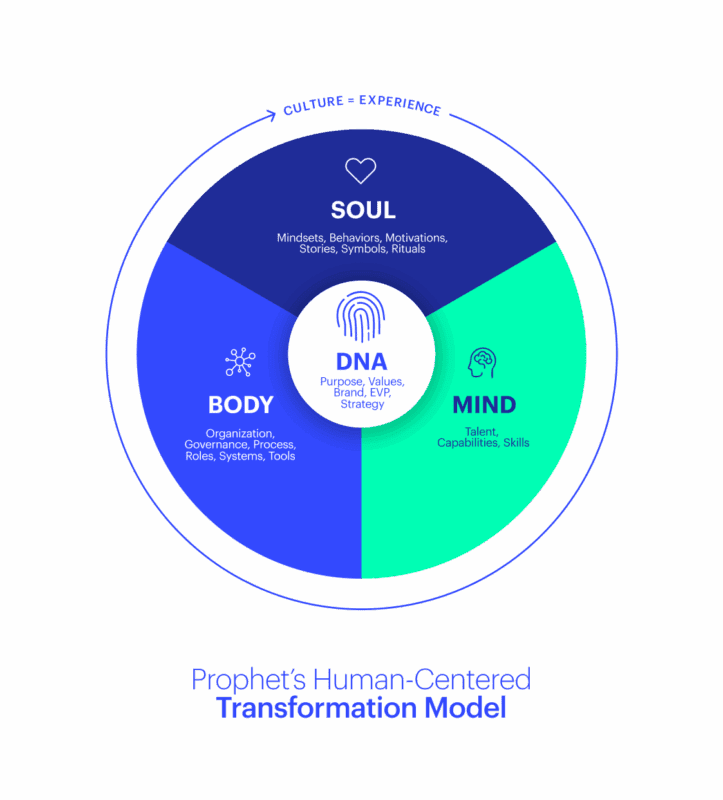
Prophet’s Human-Centered Transformation Model (HCTM) frames the organization as a living system—with a DNA, Mind, Body and Soul—that must evolve in concert for real, sustainable impact. Our research shows that true transformation happens when culture, leadership and talent align—turning AI from a tool into a powerful engine for growth.
Four Key Levers of Human-Centered AI
DNA: Aligning AI with Purpose and Values. Organizational DNA defines purpose and anchors strategy. When AI is aligned with core values, it gains direction, momentum—and staying power.
Mind: Scale Skills for What’s Next. AI demands new capabilities across the workforce. Equip employees with the skills and mindsets needed to adapt, grow and lead through change.
Body: Redesign How Work Gets Done. AI is reshaping roles, systems and workflows. To scale transformation, organizations must rethink how work happens and make agility the norm.
Soul: Deepen Human Connection. By removing routine tasks, AI allows employees to focus on meaning, creativity and connection. The result: stronger engagement and purpose-driven work.
The Future is Human-Centered AI
It’s time to move beyond fragmented experimentation and toward intentional transformation.
AI isn’t just about automation—it’s about reimagining how people work, connect and grow.
When embedded across the DNA, Mind, Body and Soul of an organization, AI becomes more than a tool. It becomes a catalyst for purpose-driven growth, empowered talent and lasting cultural change.
The Future is Human-Centered AI
It’s time to move beyond fragmented experimentation and toward intentional transformation.
AI isn’t just about automation—it’s about reimagining how people work, connect and grow.
When embedded across the DNA, Mind, Body and Soul of an organization, AI becomes more than a tool. It becomes a catalyst for purpose-driven growth, empowered talent and lasting cultural change.
LET’S BUILD HUMAN-CENTERED AI SOLUTIONS TOGETHER
Get in touch with our team to explore how Prophet can help your organization unlock uncommon growth through culture-led, AI-enabled transformation.
This is how we’ve been building an AI-ready organization at Prophet.
At Prophet, we’ve been exploring AI’s potential for some time—experimenting, building and learning across teams. But our biggest leap forward didn’t come from a new tool or top-down policy. It came from a collective shift in focus.
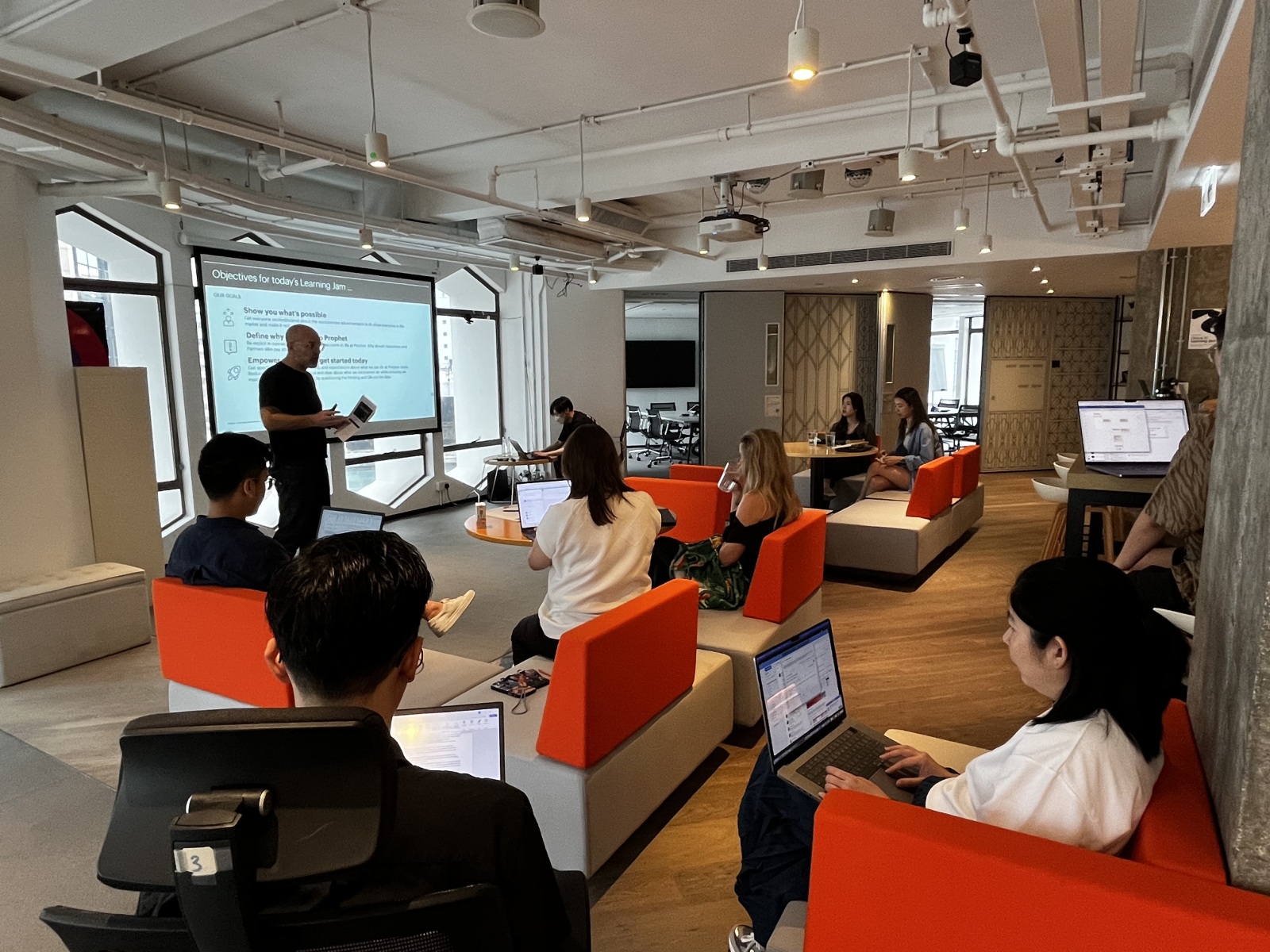
Earlier this year, we hit pause across all 15 global offices to host our AI Learning Jam—a firmwide sprint designed to upskill, energize and unlock new ideas. We brought in outside experts, spotlighted internal pioneers already integrating AI into their work, and carved out time for hands-on experimentation. Teams tackled real client challenges using AI—and the momentum was immediate.
Feedback from the event was among the strongest we’ve seen for a firmwide initiative. But more powerful than any metric was what it set in motion.
We followed it with our first AI Demo Day, inviting submissions in three categories:
How we’re using AI to enhance current work
How we’re guiding clients on AI strategy
How we’re building AI products and solutions
Twenty demos. Ten teams were selected to present to our executive leadership. The range of use cases was eye-opening—from custom GPTs that accelerate insights and storytelling, to AI-powered tools that generate consulting outputs, to strategic frameworks helping clients define their AI vision. We carefully considered the potential for each demo and recognized the top contributors. We are now scaling these solutions firmwide.
One team reported a 90% time savings on market mapping tasks—freeing them to focus on strategic thinking and creativity. Another team doubled their content output using a custom GPT trained on a specific tone of voice.
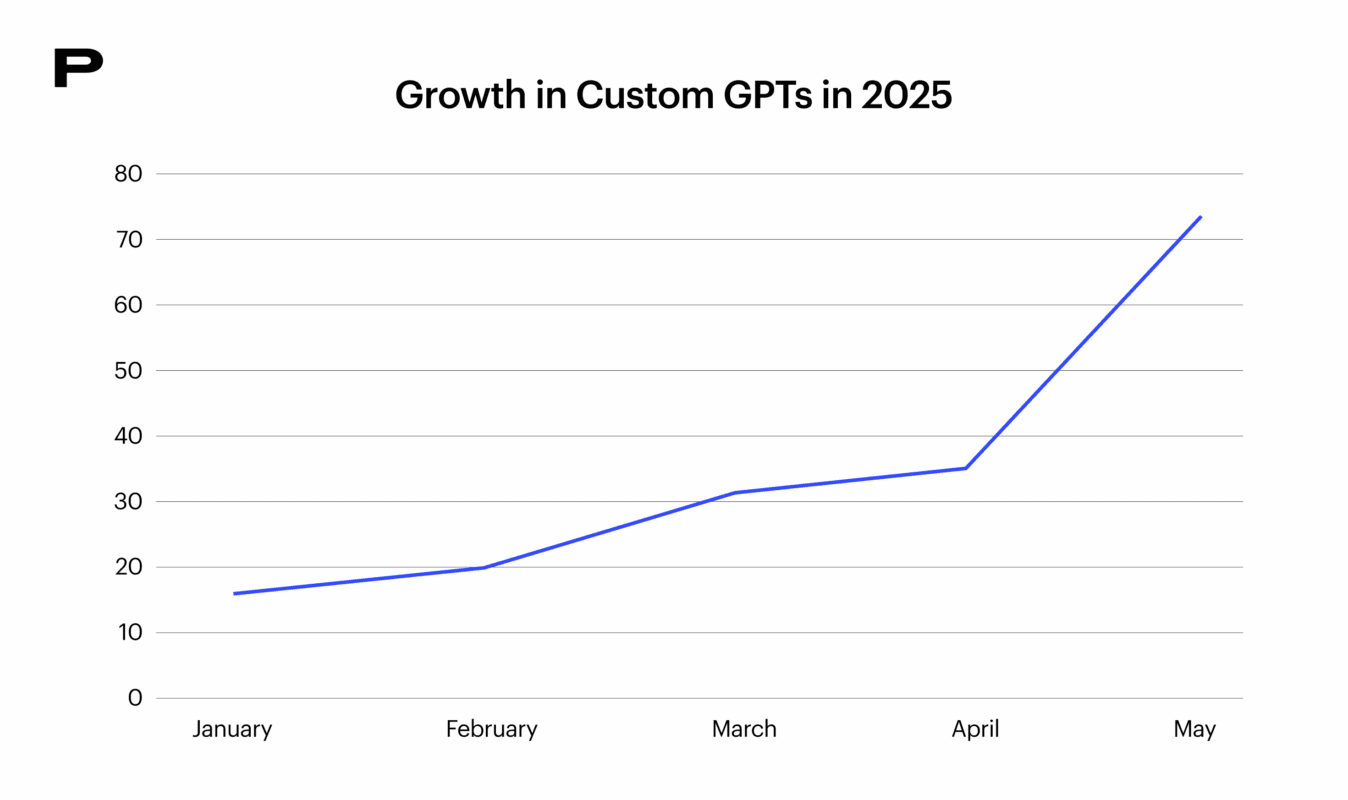
Our focus on AI solutions isn’t a one-off initiative. It’s a cultural shift—and we’re seeing it in the data. The number of custom GPTs built internally has grown exponentially.
We’re early—but we’re all in. Because when transformation starts with people and is guided by purpose, it scales faster and sticks deeper.
And we know many organizations are asking the same questions: Where do we start? How do we move beyond pilots? What should we build, automate—or advise on?
If you’re looking to scale AI adoption, build internal momentum, or embed AI into the customer experience—we welcome that conversation. Get in touch.
As GenAI transforms customer experiences, brand authenticity and transparency are more critical than ever. Learn how companies can use AI to deepen brand loyalty and drive growth in Asia’s fast-evolving markets.
Does branding still matter in the AI era? The answer is not just yes—it’s becoming more critical than ever.
AI is radically transforming how people shop, communicate and make decisions. In Asia, consumers are embracing these powerful technologies faster than anywhere else in the world. They’re using AI assistants, experiencing AI-powered recommendations and creating content with generative tools daily.
Something surprising emerged from Prophet’s research, The Rise of the AI-Powered Consumer, comparing GenAI trends in Asia and around the world: As technology advances, human connection becomes more valuable. We surveyed consumers across five countries and discovered that people in China and Singapore aren’t just AI enthusiasts—they’re also the most insistent on authentic brand relationships. They want the efficiency AI brings and the transparency, trust and genuine human touch that brands can uniquely deliver.
This creates both a challenge and an opportunity for brands in Asia. Here are three key trends brand leaders should keep in mind, along with examples of companies already building powerful, practical connections in the wake of AI disruption.
Consumers Want Authenticity
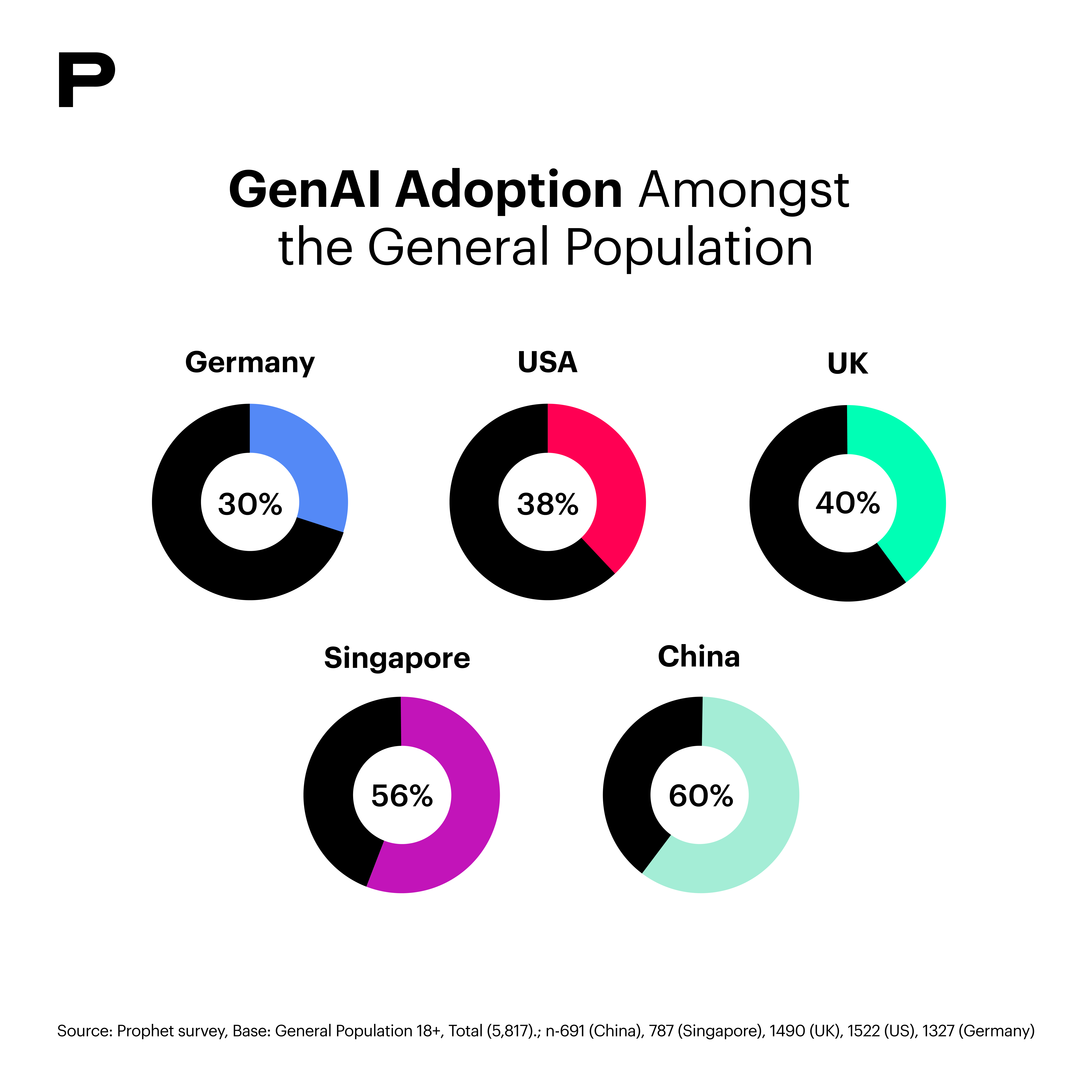
Consumers are adopting GenAI at a fast pace, especially in Asia. Prophet’s study found that 60% of Chinese consumers and 56% in Singapore are using GenAI, well ahead of consumers in Western markets. Moreover, 84% of consumers in China and 75% in Singapore say they are excited about brands that integrate AI.
With brands being more dynamic than ever, they must evolve into intuitive storytellers, balancing machine insights with human judgment. If brands are not careful, GenAI content and experiences can appear too polished or too perfect. That may feel generic and inhuman, undermining trust and connection.
At the same time, concerns persist. Globally, 43% of consumers find some aspect of AI worrisome, but in Singapore, that rises to 57%—the highest among surveyed countries. People also expect companies to be honest, with 82% saying companies should always disclose the ways they use AI.
As consumers become more aware of AI’s role in marketing, brands must continue to lead with authenticity to maintain credibility and long-term loyalty. Brands that leverage AI for personalization can enhance their identity and relevance, but they must also be cautious of over-reliance on technology, not losing the humanity that makes for meaningful and enduring relationships with consumers.
One powerful example of authentic AI use comes from Telekom Malaysia. To celebrate Hari Kebangsaan (Malaysia’s Independence Day) in 2024, it launched “Sejuta Suara, Satu Ritma, Jiwa Merdeka,” using AI-driven lip-syncing and voice cloning to let Malaysians sing in their preferred language. Rather than showcasing AI for its own sake, the campaign celebrated Malaysia’s rich linguistic diversity and highlighted the brand’s promise to open doors to a promising tomorrow.
The result: AI amplified cultural identity rather than diminishing it, showing how technology can strengthen authentic connections.
Other brands are also using AI in service of authenticity. Zalora, a fashion ecommerce site, developed an intuitive, multilingual chatbot deeply integrated with customer service data. It helps users track orders, manage returns and resolve issues quickly—and it does this in ways that look and feel distinctly “on brand.” This demonstrates how AI can enhance the customer experience while maintaining the authentic brand voice that shoppers trust.
Brands can enhance authenticity by:
Ensuring overall brand strategy is built based on core human insights and not technology alone
Creating AI tools that solve real customer problems rather than showcasing technology
Maintaining consistent brand voice and values across touchpoints using custom-built AI assistants
Combining human oversight with AI to ensure outputs stay true to brand tone, audience needs, and real-world relevance
Consumers Crave Human Connection
In China, 89% of consumers believe GenAI improves people’s lives by automating tasks and boosting efficiency; in Singapore, it’s 84%. (These enhancements are proving so valuable to consumers that 83% of Southeast Asian shoppers say they would pay more for them.)
But even with their enthusiasm, consumers remain wary of losing human interaction. In Singapore, 75% of consumers worry that AI might replace human contact—the highest level of concern among surveyed markets. Almost half of Chinese consumers also share this fear.
Many companies begin their AI journeys by solving customer pain points. When AI simplifies transactions, consumers welcome it. But in the meantime, the role of brand remains crucial by ensuring that technology complements—not replaces—human connection.
AirAsia’s “Ask Bo” concierge app is a strong example. While it automates travel tasks like booking and gate changes, recent updates allow customers to seamlessly transfer to a human agent when needed—combining AI efficiency with human reassurance. This hybrid approach acknowledges that while AI can handle routine tasks, human intervention remains essential for complex situations—preserving the human touch that builds trust.
Shiseido offers another best practice. Partnering with Revieve, a beauty tech developer, it uses AI for skin analysis but complements it with in-store beauty consultants who personalize recommendations. The result is an experience that feels deeply human, even when AI powers the initial interaction. By combining technological analysis with human expertise, Shiseido creates a premium experience that neither AI nor humans could deliver alone, deepening the customer relationship.
Brands can maintain human connection by:
Clearly signaling human oversight within AI systems
Giving customers access to live human support when needed
Designing AI experiences that complement rather than replace human expertise
Creating opportunities for emotional connection even within automated processes
Loyalty Still Matters
Even as AI changes consumer expectations, and transforms the customer experience, loyalty remains at the heart of brand value AI enables brands to deliver personalized, relevant interactions that serve to strengthen bonds with customers.
This is especially true in Asia, where consumers are particularly optimistic about AI’s potential. In China, 76% believe GenAI will improve their financial well-being by offering smart insights, as do 65% of Singapore’s consumers, creating an opportunity for brands to deepen trust by delivering tangible, AI-enabled value. Asian consumers also show greater trust in AI’s ability to spot opportunities they might otherwise miss. About 72% of Chinese and 76% of Singaporean consumers believe AI can help them make better decisions—higher than any other region surveyed.
DBS Bank, headquartered in Singapore, exemplifies loyalty-building AI. It has embedded more than 800 AI models across 350 use cases, offering customers personalized financial advice. Its AI-powered virtual assistant supports call center employees, reducing call handling times by up to 20%—making human help faster and more satisfying for customers. By making human help faster and more effective, DBS strengthens its reputation for exceptional service—turning AI into a loyalty-building advantage.
Anthony Tan, Grab Group CEO and Co-Founder at GrabX 2025 (Image Source: GizGuide)
Grab, the Southeast Asian super app, is also investing heavily, introducing AI Merchant Assistant and AI Driver Companion tools in collaboration with OpenAI and Anthropic. The two AI-powered solutions are personal, intelligent assistants designed to help Grab’s merchants and drivers optimize their businesses and maximize productivity. By making daily tasks easier for its partners, Grab builds loyalty by showing its AI innovations have heart, not just efficiency. These tools demonstrate Grab’s commitment to supporting its ecosystem of partners, building a community of loyal merchants and drivers who in turn provide better service to end customers.
Brands can build loyalty by:
Personalizing experiences in ethical, human-centered ways
Designing AI solutions that save customers time and help achieve their goals
Using AI to empower employees to deliver better service
Creating feedback loops that continuously improve AI tools based on customer input
Prophet’s global research study is applied and brought to life in client engagements. We help organizations unlock uncommon growth by understanding and taking advantage of digital disruption. There are several ways to work with us:
AI-powered growth consulting: Creating future-back business and brand positioning strategies that help you act on GenAI consumer and business trends to drive tangible results
AI-enabled products and experiences: Envisioning and bringing to life new products, services and experiences that are enabled and accelerated by GenAI
AI-driven marketing organization for the age of GenAI: Understanding your marketing vision, activating relevant AI use cases and deploying new capabilities
AI is reshaping the customer journey, but it cannot replace the human elements that are central to strong brands. Consumers in Asia are embracing AI faster than anywhere else—and yet they still demand authenticity, trust and connection. Brands that use AI to enhance—not replace—these human values will be the ones that earn lasting loyalty and drive growth in the new AI economy.
Essential insights for business leaders aiming to unlock consumer-centric growth and stay ahead of the curve in 2025.
GenAI marks a turning point in digital transformation – one that is fundamentally different from any technology shift we’ve seen before. As a technology that augments intelligence and creativity, its capacity to revolutionize industries is infinite. Senior leaders across Europe are eager to tap into GenAI’s potential to drive large-scale efficiencies and expand capabilities. But what does this mean for consumers? Are businesses truly considering the impact of GenAI on consumer needs and behaviors?
As European businesses race to implement GenAI, they must center their strategies around consumers, ensuring that innovation serves not only business goals but also the evolving demands of the consumer. Placing consumers at the heart of GenAI adoption is key to achieving sustainable, uncommon growth.
Many senior leaders are excited about GenAI’s potential to drive large-scale efficiencies. Boards are focused on GenAI risks, but recognise that investments have major potential upside. Our research confirms that for businesses to win in this next wave of digital transformation, it is all about consumers.
AI Adoption Trends in Europe
Data from our latest research report, The Rise of the AI-Powered Consumer, highlights that around a third of German (30%) and nearly 40% of UK consumers have embraced GenAI tools in the last six months. However, Europe lags behind other regions – Asian markets like China and Singapore report much higher adoption rates, with 60% and 56% respectively. The slower adoption can be attributed to growing skepticism and privacy concerns.
One notable trend in the European markets we surveyed is the younger demographic leading the charge. Millennials (ages 28-42) have shown the highest adoption rates, with 53% actively engaging with GenAI tools. In comparison, GenZ (ages 16-28) lags behind by 3 percentage points. Their lower enthusiasm stems from concerns over the relevance and accuracy of GenAI’s output. With millennials holding the most purchasing power today, businesses need to act now to meet their needs, or risk falling behind.
Putting Consumers at the Heart of AI Innovation
For GenAI to drive meaningful innovation, companies need to understand how European consumers are interacting with the technology. Our research shows that more than half of European consumers surveyed (and global consumers) use GenAI for both professional and personal purposes, with personal usage rates hitting 90%.
The leading use case of GenAI is entertainment – creating memes, songs and other content to share with family and friends. This trend offers brands an opportunity to engage with consumers in playful, creative ways. Take Zalando, the German e-commerce giant, for example: they’ve introduced the Algorithmic Fashion Companion (AFC), a GenAI-powered tool that provides personalized fashion recommendations, resulting in a 40% increase in average basket size.
European consumers also expect more from brands adopting GenAI. In the UK and Germany, over 70% of consumers want to use AI during the pre-purchase phase, showcasing the growing demand for AI-powered product and service exploration. Moreover, 73% of respondents view brands using GenAI as innovative, while 77% say GenAI sparks new product discoveries. It’s clear that consumers want AI to do more than just entertain – they want it to help them make informed choices.
AI and Ethical Responsibility
In Europe, there is a heightened demand for accountability and transparency when it comes to GenAI. Nearly 66% of German consumers express concerns about the ethical use of GenAI, a sentiment echoed across other European markets. Moreover, 82% of global consumers expect brands to disclose when they are using AI in their services.
The reason for this concern is clear – privacy and data security remain top priorities for European consumers. Two-thirds of consumers cite these as primary barriers to greater GenAI adoption. This is especially pronounced in Germany, where privacy laws and concerns about data misuse are particularly strict. Consumers expect businesses to take the lead in creating ethical frameworks and transparent policies for AI usage, with 80% of global respondents agreeing that it is the responsibility of companies to develop clear guidelines for GenAI.
As businesses in Europe look to unlock the full potential of GenAI, they must balance enthusiasm with caution. There is certainly a growing appetite for innovation, but the key to success lies in ensuring that these technologies enhance the consumer experience in ethical and responsible ways. This means taking seriously the need for transparency, privacy protection and clear ethical guidelines.
For European brands to thrive, they must center their GenAI strategies around consumer needs, build trust and foster long-term loyalty. By doing so, they can position themselves for uncommon growth.
Discover how GenAI is reshaping digital transformation by putting consumers at the center. Our report reveals surprising insights into how consumers are adopting GenAI faster than expected and leveraging it to improve their lives. Learn how businesses can apply GenAI not just for optimization or efficiency, but to unlock consumer-centric growth and stay ahead of the curve.
For business leaders formulating GenAI strategies and identifying priority use cases, the time is now to raise and consider these questions:
How do we unleash growth with this new technology?
What can we do now to attract, engage and serve customers?
Will we be in the same business tomorrow as we’re in today?
The TL;DR on Our Findings
We surveyed more than 2,400 consumers across the globe to understand how they perceive and use GenAI, here’s what we found:
With an average adoption rate of 45%, consumers are taking up GenAI faster and at a greater scale than previous breakthrough technologies.
Typically, younger consumers show the greatest interest in new tech. But in the case of GenAI, there is strong adoption by all generations. Millennials have the highest adoption rates (53%).
“Entertainment” is the top consumer use case today. Of GenAI users, 77% believe GenAI provides inspiration and helps them discover new things.
Consumers want GenAI to give them coaching and – in some cases – make decisions autonomously. They look for support in meaningful parts of their lives.
Consumers are more optimistic than concerned: 76% of survey respondents are excited about the possibilities it creates.
Download the report to discover how consumers are leveraging GenAI today and how your business can harness these insights to create transformative growth opportunities.
“It is the tech of the future; powered by automation and the power of us.”
MALE, MILLENNIAL, U.S.
“AI’s future technological developments can help humans create a better life.”
MALE, GEN X, CHINA
Winning with GenAI Requires a Consumer-Centric Approach
To unlock uncommon growth, brands must embrace GenAI with bold strategies and customer-centric thinking. Focus on creating value through inspiring experiences, reimagined consumer journeys, and innovative business models.
Balance near-term AI deployment with long-term transformative opportunities and prioritize building organizational infrastructure to scale effectively. By putting consumers at the heart of GenAI strategies, brands can transcend technological hype, delivering impactful, human-centered outcomes that foster trust and drive sustainable growth.